

Sperm whale
Physeter macrocephalus
biology
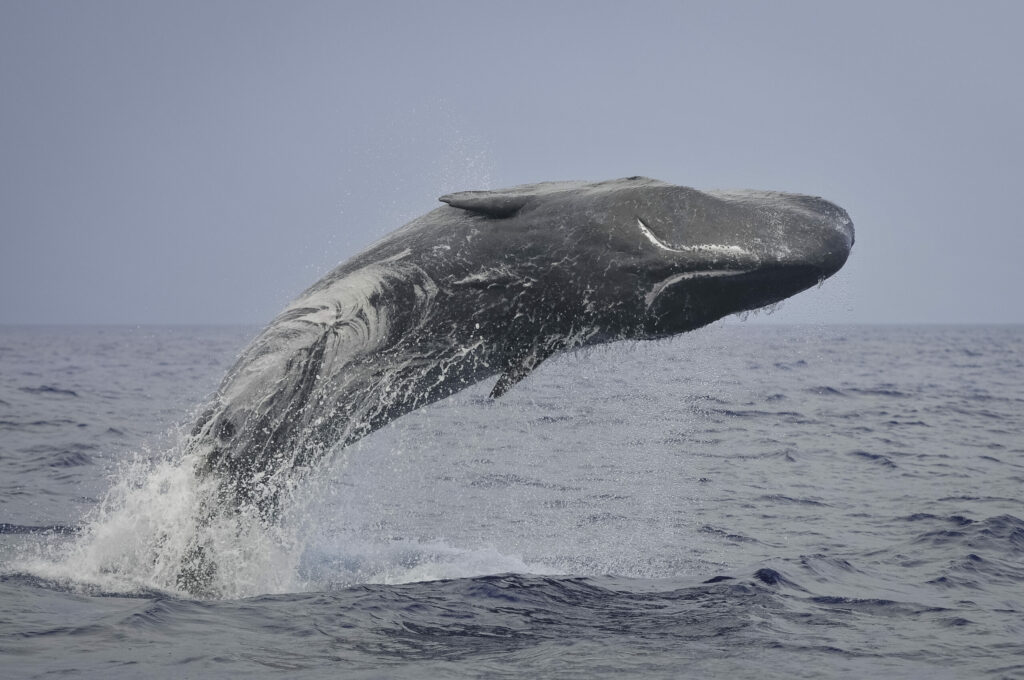
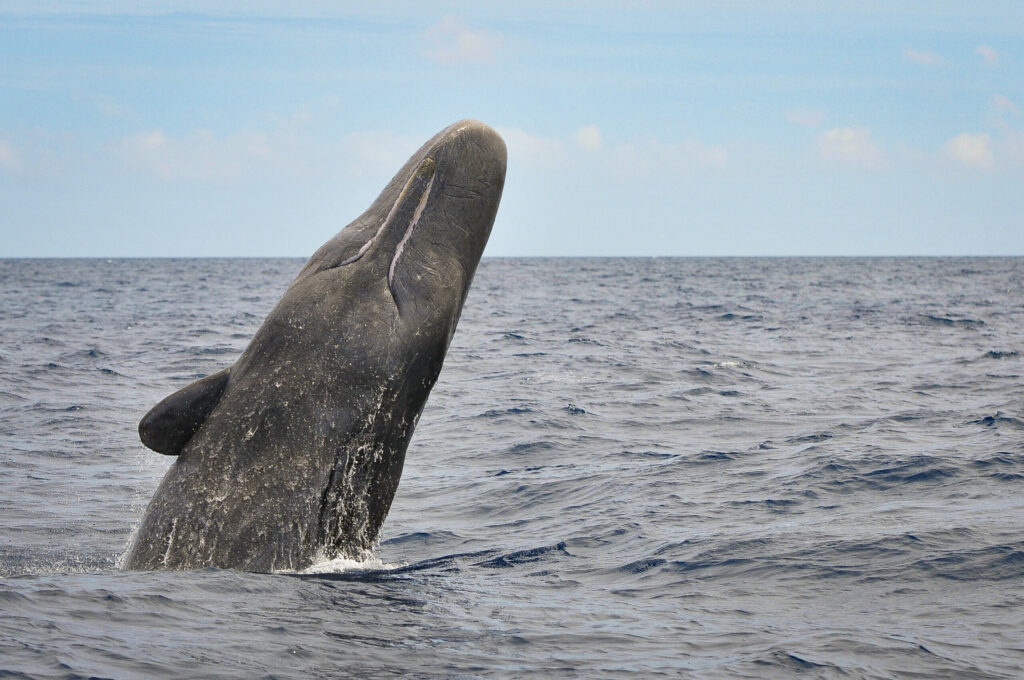
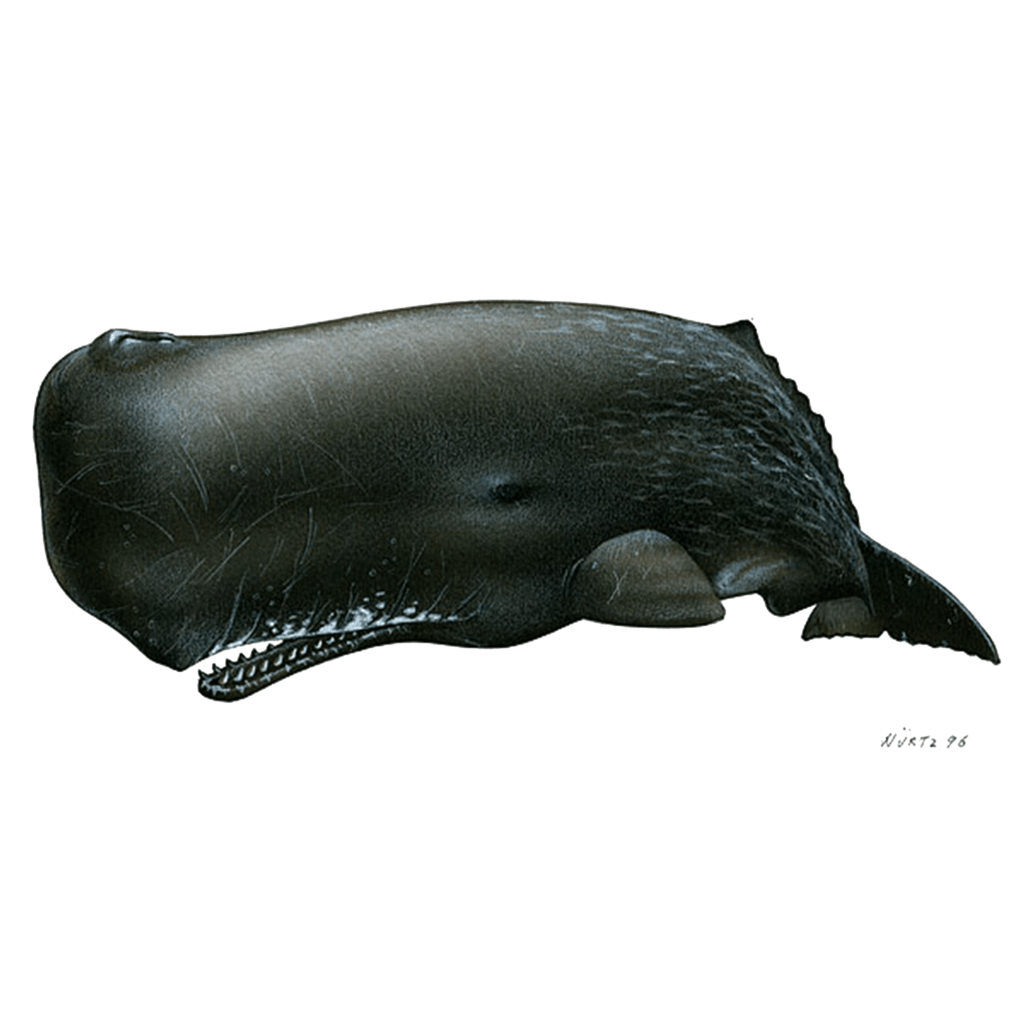
The Sperm whale is the largest of all toothed whales and exhibits the most extreme sexual dimorphism of any cetacean. Males can reach lengths of 15–18 m and weigh up to 55–57 tonnes, while females are significantly smaller, typically reaching 11–12 m and weighing around 15–20 tonnes. Newborns are about 4 m long. Their lower jaw is narrow and lined with 18 to 26 pairs of large, conical teeth that fit into sockets in the upper jaw. They can live for 70 years or more.
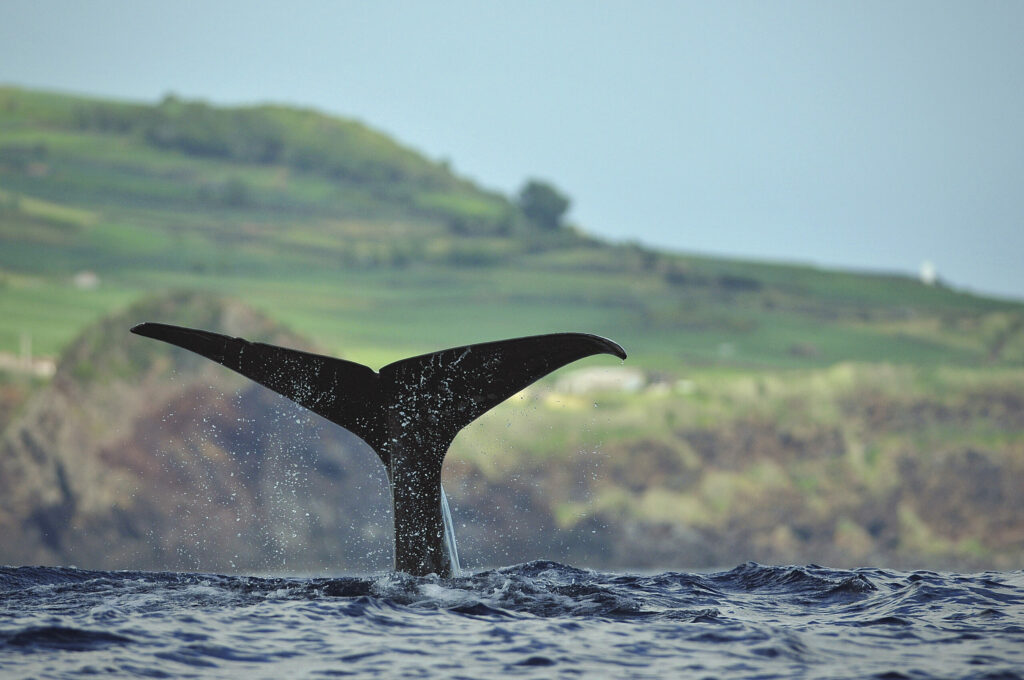
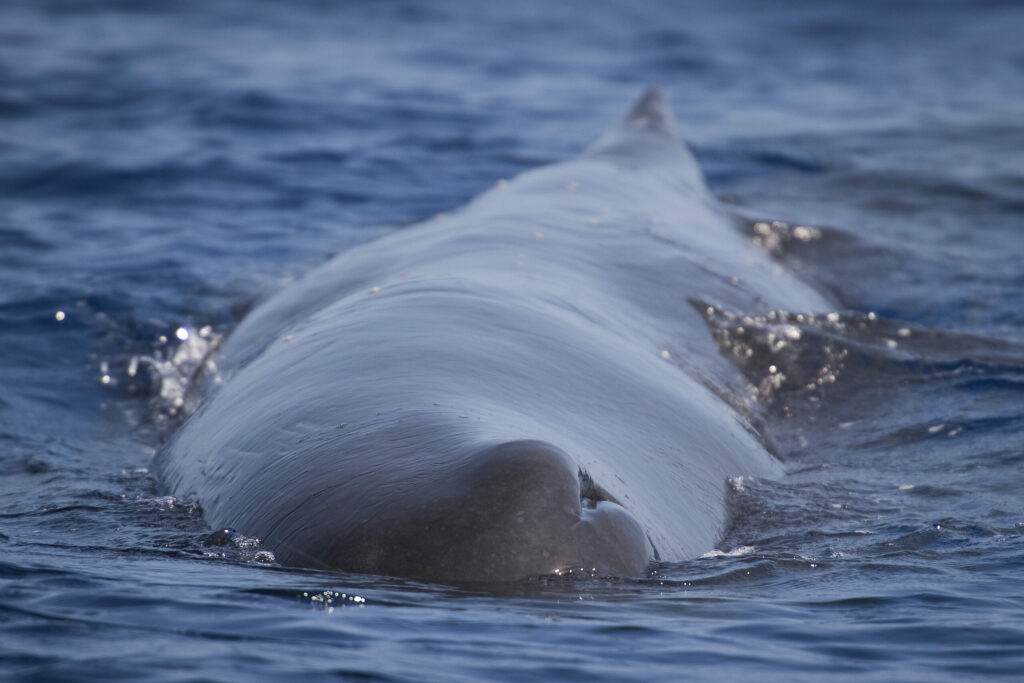
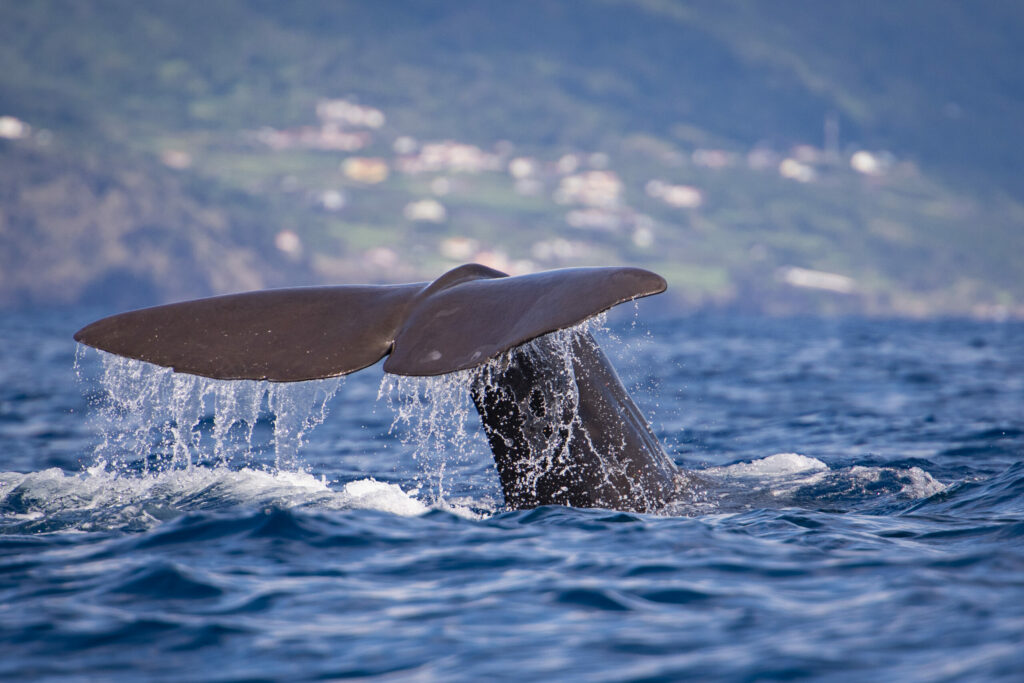
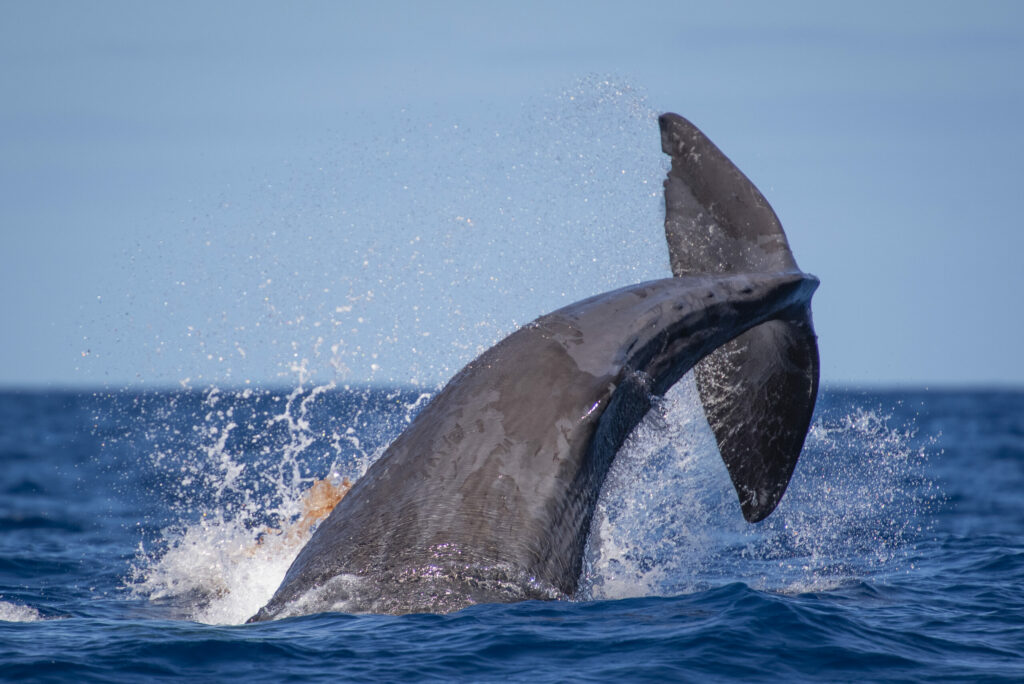
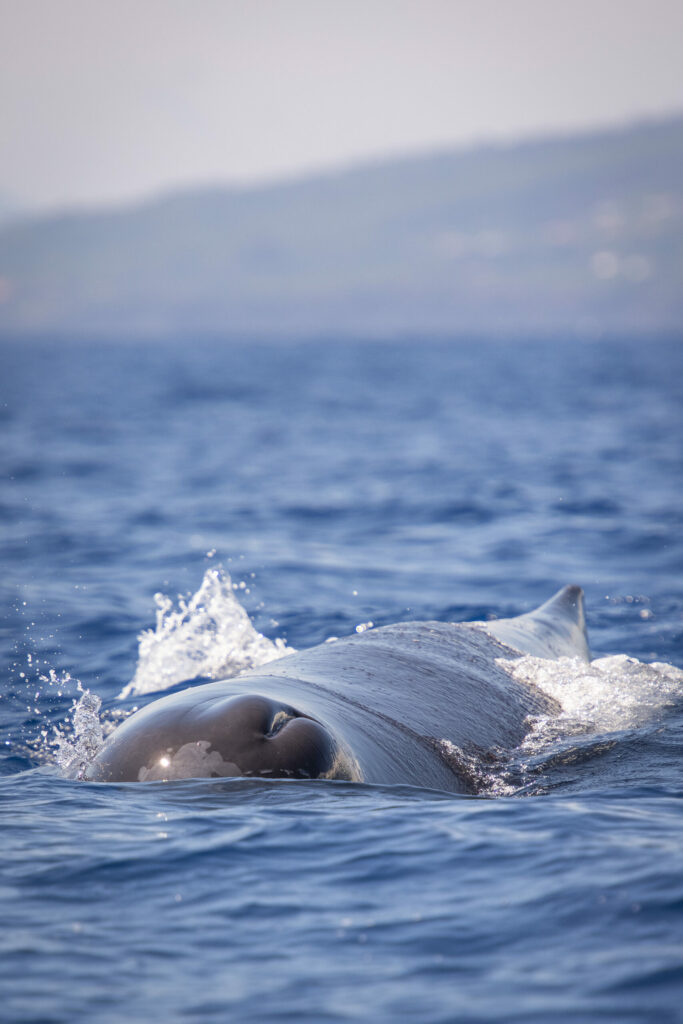
Their most distinctive feature is the enormous, square-shaped head, which can account for up to one-third of a male's body length. Inside lies the spermaceti organ, a large cavity filled with liquid wax used to control buoyancy and to focus sound during echolocation (this whale has the largest brain of any animal). Unlike most whales, their skin is wrinkled like a prune, except on the head. The single blowhole is located on the far left of the snout, resulting in a unique angular blow directed forward and to the left. The dorsal fin is a low, rounded "hump" followed by several "knuckles." Their broad, triangular flukes are almost always raised high before a deep dive.
They feed primarily on medium to large-sized squid (including the Giant Squid), but also on fish. Sperm whales live in stable matrilineal groups of females and calves (8–20 individuals). Young males leave these groups around age 10 to form "bachelor schools," eventually becoming solitary as they age. They are extreme divers, typically reaching depths of 300–600 m, though they are capable of diving to 3,000 m for over two hours.
Their most distinctive feature is the enormous, square-shaped head, which can account for up to one-third of a male's body length. Inside lies the spermaceti organ, a large cavity filled with liquid wax used to control buoyancy and to focus sound during echolocation (this whale has the largest brain of any animal). Unlike most whales, their skin is wrinkled like a prune, except on the head. The single blowhole is located on the far left of the snout, resulting in a unique angular blow directed forward and to the left. The dorsal fin is a low, rounded "hump" followed by several "knuckles." Their broad, triangular flukes are almost always raised high before a deep dive.
They feed primarily on medium to large-sized squid (including the Giant Squid), but also on fish. Sperm whales live in stable matrilineal groups of females and calves (8–20 individuals). Young males leave these groups around age 10 to form "bachelor schools," eventually becoming solitary as they age. They are extreme divers, typically reaching depths of 300–600 m, though they are capable of diving to 3,000 m for over two hours.
observation
Sperm whales have a cosmopolitan distribution. In the Azores, they are the only resident whale species and the undisputed "emblem" of the islands. While females and juveniles remain in temperate and tropical waters year-round, large adult males migrate to colder polar waters to feed, returning to warmer latitudes to breed.
In the Azores, they are observed by the Espaço Talassa team throughout the season (with peak sightings in the summer months, especially July). On average, they are present on 60% of our trips. Because of their distinctive forward-leaning blow and square head, they are easy to identify even at a distance. Although their low blow may occasionally be confused with the Northern bottlenose whale (Hyperoodon ampullatus), the latter has a much more prominent, falcate dorsal fin.
Local expertise is unmatched: studies based on photo-identification (such as Lisa Steiner’s catalogue) have recorded nearly 3,000 individuals in Azorean waters, many of which return to the same areas for decades. Lajes do Pico remains a world-renowned location to study these giants, transitioning from a historic whaling centre (until 1987) to a global leader in ethical whale watching.
In the Azores, they are observed by the Espaço Talassa team throughout the season (with peak sightings in the summer months, especially July). On average, they are present on 60% of our trips. Because of their distinctive forward-leaning blow and square head, they are easy to identify even at a distance. Although their low blow may occasionally be confused with the Northern bottlenose whale (Hyperoodon ampullatus), the latter has a much more prominent, falcate dorsal fin.
Local expertise is unmatched: studies based on photo-identification (such as Lisa Steiner’s catalogue) have recorded nearly 3,000 individuals in Azorean waters, many of which return to the same areas for decades. Lajes do Pico remains a world-renowned location to study these giants, transitioning from a historic whaling centre (until 1987) to a global leader in ethical whale watching.
names
PT: Cachalote
AZORES: Baleia (The traditional name used by Azorean whalers)
ENG: Sperm whale
FR: Cachalot
DE: Pottwal
IT: Capodoglio
ESP: Cachalote
NL: Potvis
AZORES: Baleia (The traditional name used by Azorean whalers)
ENG: Sperm whale
FR: Cachalot
DE: Pottwal
IT: Capodoglio
ESP: Cachalote
NL: Potvis
Scientific name
Physeter macrocephalus
Discovery
Linnaeus, 1758