


Striped dolphin
Stenella coeruleoalba
biology
Newborn striped dolphins are approximately 1 m long. Adults can grow to lengths of 1.8 m to 2.5 m and weigh between 90 and 150 kg. They typically possess 40 to 55 pairs of slender, pointed teeth in each jaw. Their lifespan is estimated to be almost 60 years.
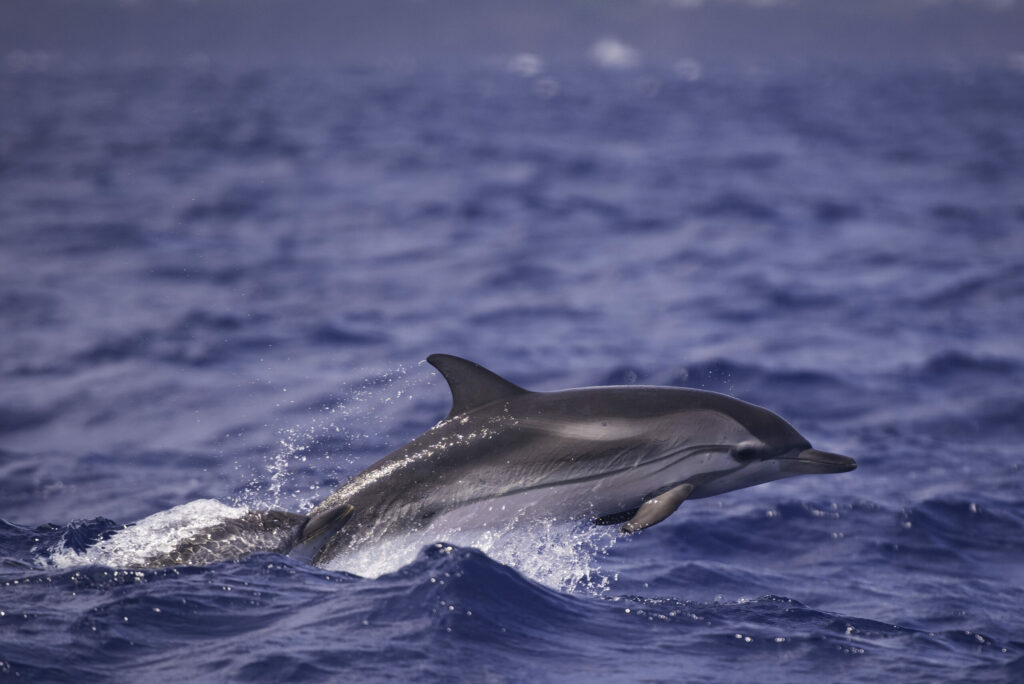
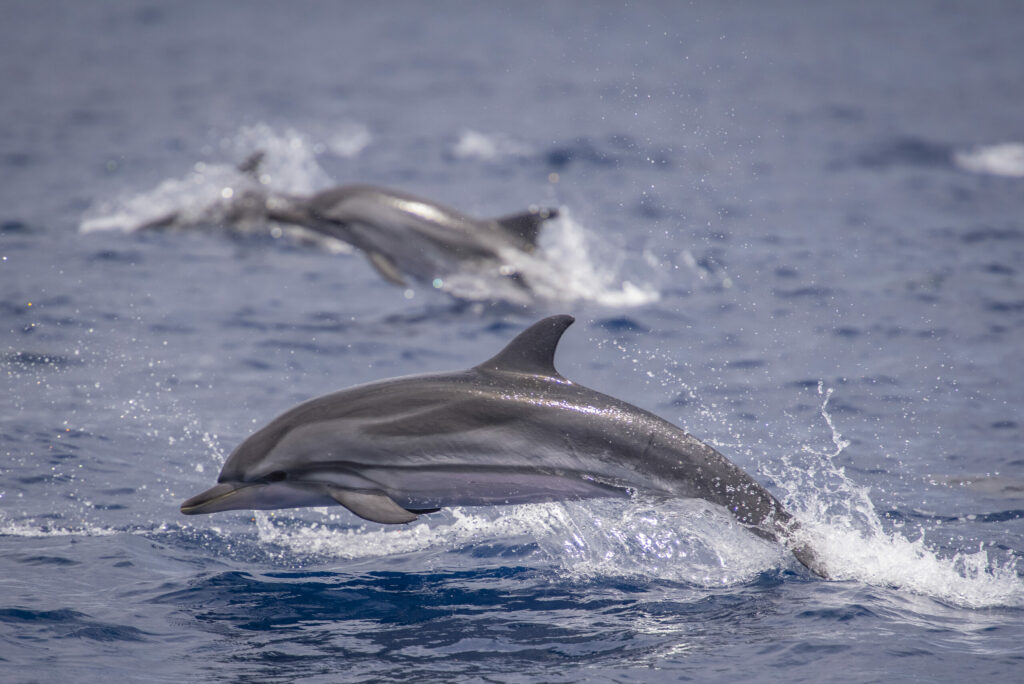
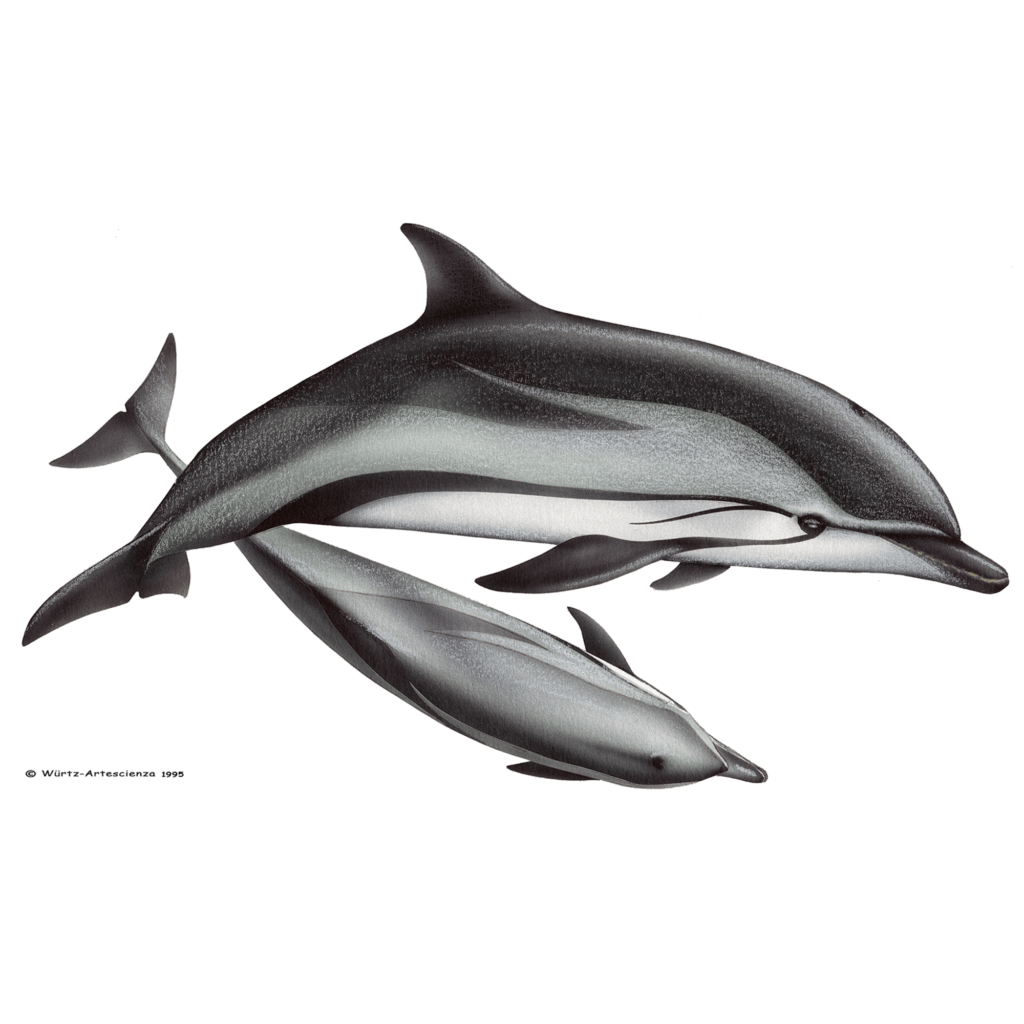
The striped dolphin is lean and robustly built, featuring a striking three-part color pattern: a dark bluish-grey dorsal cape, light grey sides, and a white or often bright pink belly. A unique and diagnostic feature is the "spinal blaze"—a flame-shaped patch of light grey that curves upward from the flank toward the dorsal fin. They are also easily identified by the dark stripes running from the eye to the anus and from the eye to the flipper.
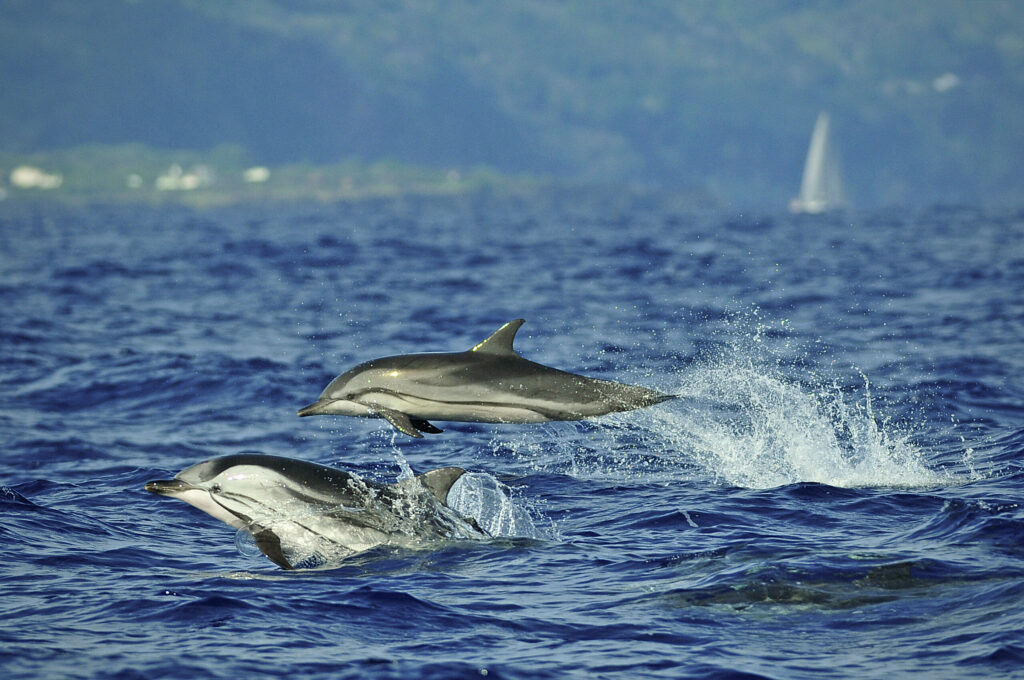
These dolphins are exceptionally fast and acrobatic swimmers. They are the only species known to perform "roto-tailing"—a high-speed jump followed by a rapid circular rotation of the tail. While they can be shy toward vessels in some regions, in the Azores they are often high-energy bow-riders. They feed on small fish and cephalopods and are capable of diving to depths of 200–700 m. Social groups usually consist of several dozen to a few hundred individuals, often forming mixed-species schools with Short-beaked common dolphins and Atlantic spotted dolphins.
The striped dolphin is lean and robustly built, featuring a striking three-part color pattern: a dark bluish-grey dorsal cape, light grey sides, and a white or often bright pink belly. A unique and diagnostic feature is the "spinal blaze"—a flame-shaped patch of light grey that curves upward from the flank toward the dorsal fin. They are also easily identified by the dark stripes running from the eye to the anus and from the eye to the flipper.
These dolphins are exceptionally fast and acrobatic swimmers. They are the only species known to perform "roto-tailing"—a high-speed jump followed by a rapid circular rotation of the tail. While they can be shy toward vessels in some regions, in the Azores they are often high-energy bow-riders. They feed on small fish and cephalopods and are capable of diving to depths of 200–700 m. Social groups usually consist of several dozen to a few hundred individuals, often forming mixed-species schools with Short-beaked common dolphins and Atlantic spotted dolphins.
observation
Striped dolphins have a wide distribution in tropical and temperate waters worldwide. They are primarily an oceanic species, typically found in deep waters far from the coast.
Identification Challenges: At a distance, they can be confused with Short-beaked common dolphins (Delphinus delphis). However, common dolphins have a unique "hourglass" pattern with a yellow/tan patch on the flank, whereas the striped dolphin has the light grey "blaze" and distinct long stripes. Juvenile Atlantic spotted dolphins (Stenella frontalis) may also look similar but lack the eye-to-anus stripe.
In the Azores, the striped dolphin is a seasonal visitor, primarily observed during the summer months as waters warm. They are present on average in 28% of Espaço Talassa’s trips, with encounters generally happening further offshore over deep-water canyons.
Identification Challenges: At a distance, they can be confused with Short-beaked common dolphins (Delphinus delphis). However, common dolphins have a unique "hourglass" pattern with a yellow/tan patch on the flank, whereas the striped dolphin has the light grey "blaze" and distinct long stripes. Juvenile Atlantic spotted dolphins (Stenella frontalis) may also look similar but lack the eye-to-anus stripe.
In the Azores, the striped dolphin is a seasonal visitor, primarily observed during the summer months as waters warm. They are present on average in 28% of Espaço Talassa’s trips, with encounters generally happening further offshore over deep-water canyons.
names
PT: Golfinho-riscado
AÇORES: Toninha-riscada
ENG: Striped dolphin
FR: Dauphin bleu et blanc
DE: Blau-Weiβer Delfin
IT: Stenella striata
ESP: Delfín listado
NL: Gestreepte dolfijn
AÇORES: Toninha-riscada
ENG: Striped dolphin
FR: Dauphin bleu et blanc
DE: Blau-Weiβer Delfin
IT: Stenella striata
ESP: Delfín listado
NL: Gestreepte dolfijn
Scientific name
Stenella coeruleoalba
Discovery
Meyen, 1833