
Blue whale
Balaenoptera musculus
biology
Blue whales are approximately 7 m to 7.5 m long at birth, weighing about 3,000 kg. They are the largest animals to have ever existed on Earth. In the Northern Hemisphere, adults typically reach 24–27 m (with record lengths exceeding 33 m in the Southern Hemisphere). They can weigh between 100 and 120 tonnes, with exceptional individuals reaching up to 190 tonnes. They possess 260 to 400 black baleen plates per side, each measuring about 1 m. Their lifespan is estimated to be 80 to 90 years or more.
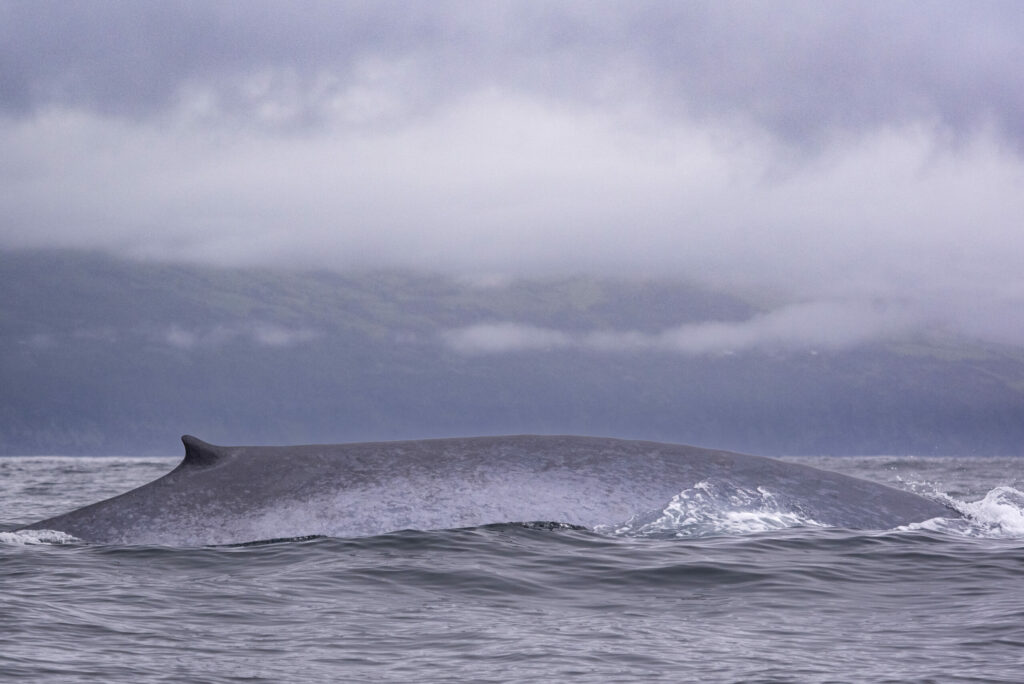
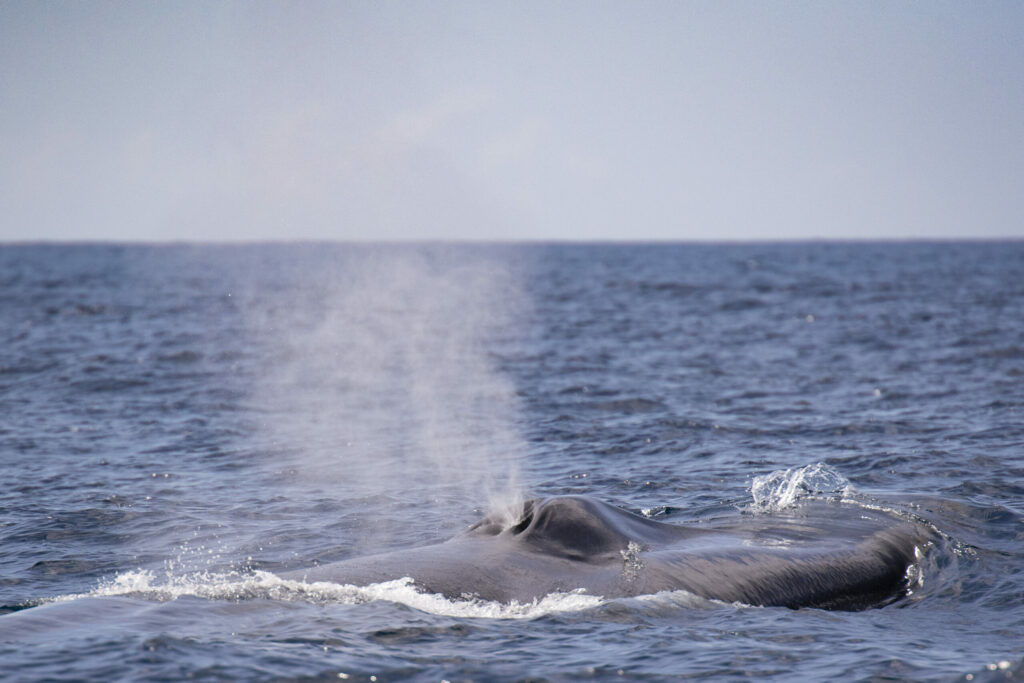
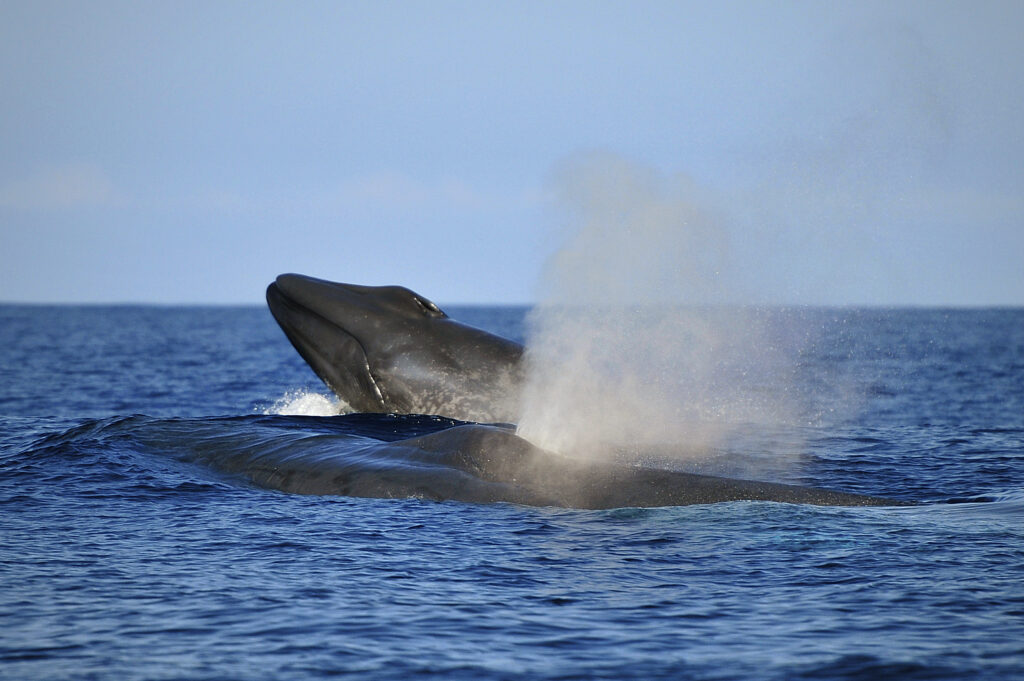
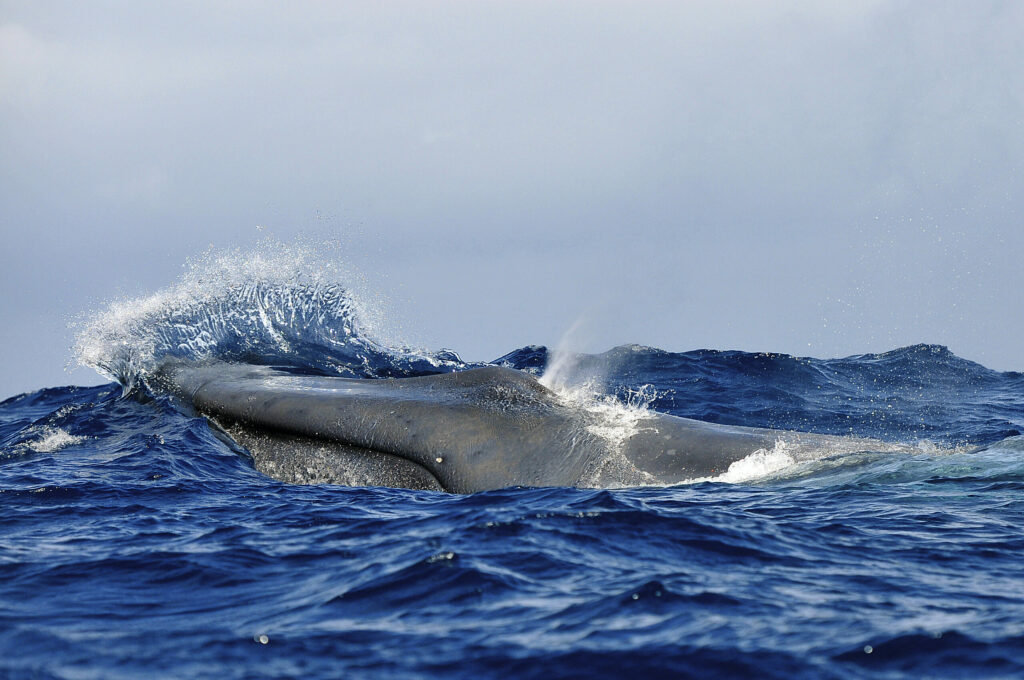
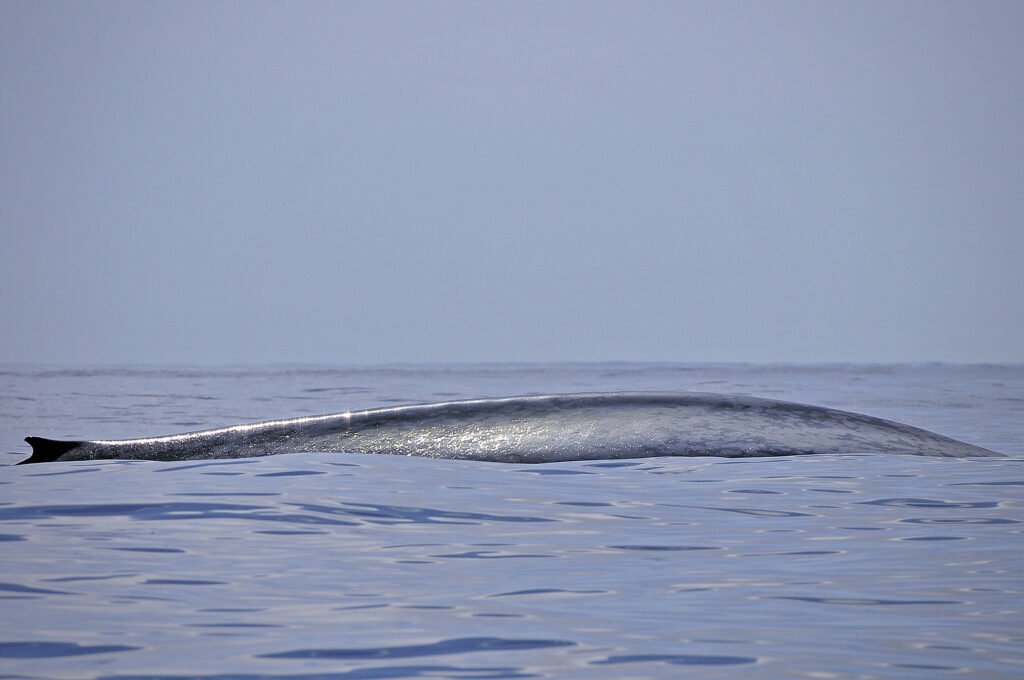
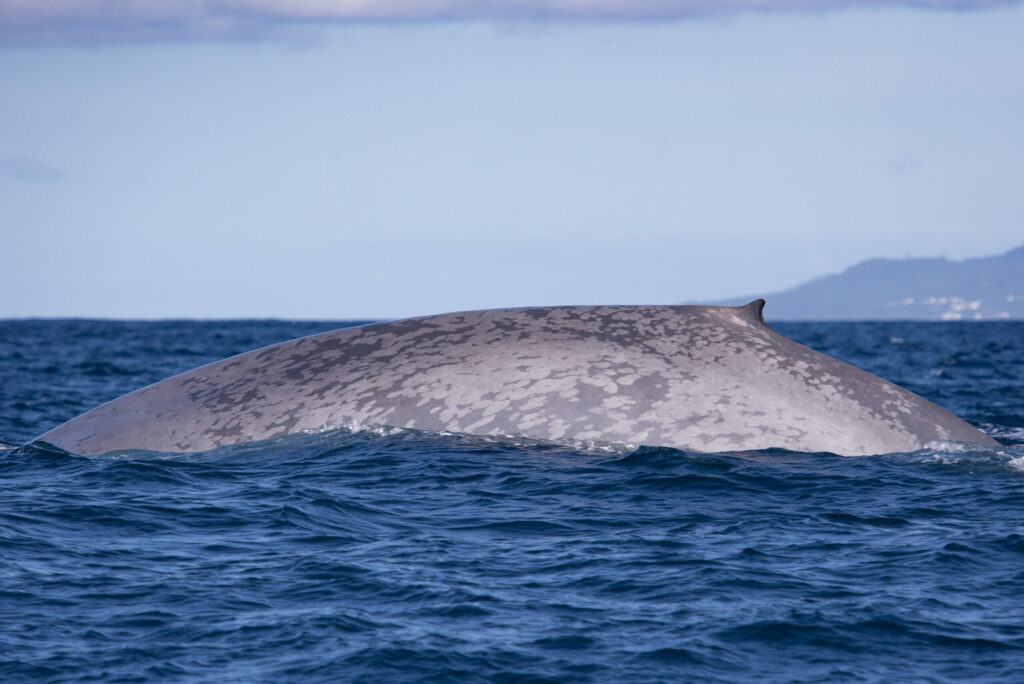
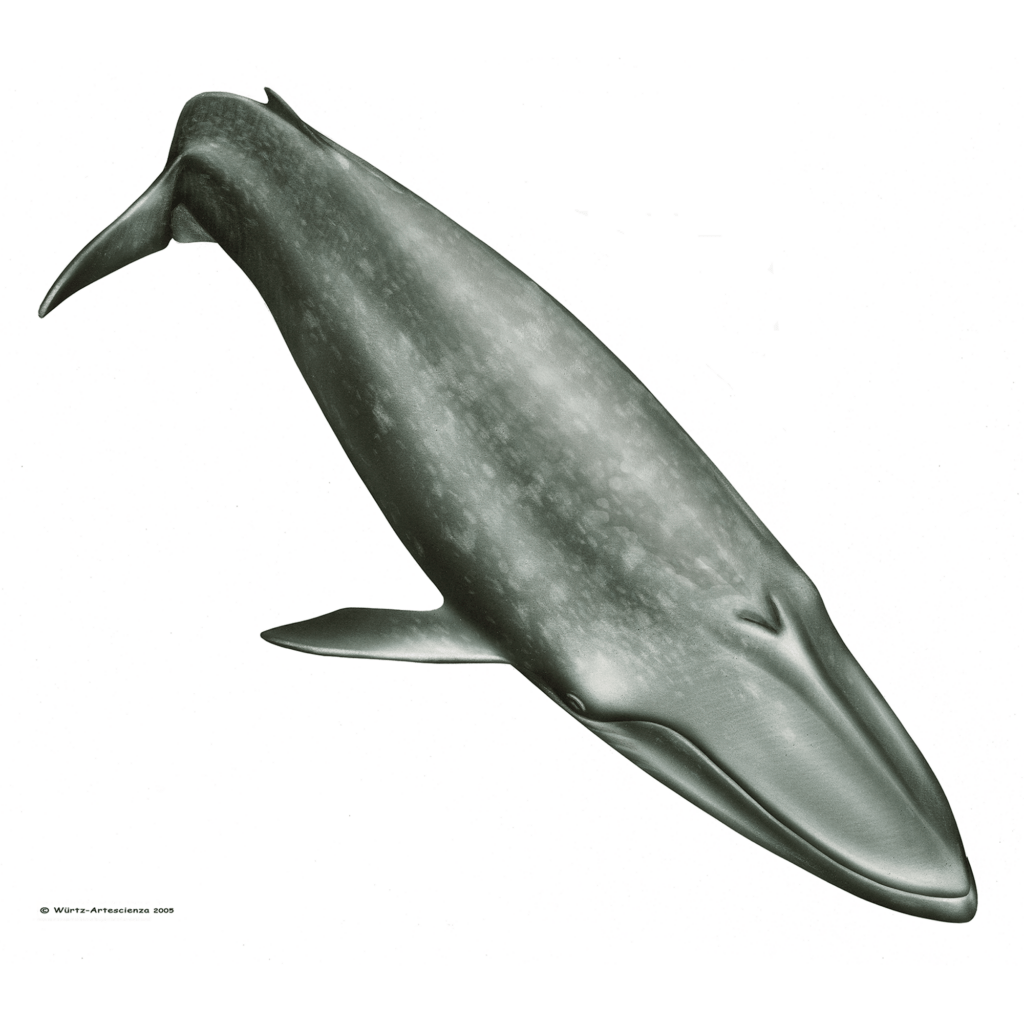
The body is a beautiful mottled blue-grey, appearing vibrant aquamarine when seen through the water. This mottling pattern is unique to each whale, like a fingerprint, allowing for photo-identification. Historically, sailors called them "Sulphur-bottoms" because their bellies can appear yellowish in cold waters due to an accumulation of microscopic diatoms. From above, the head is broad and U-shaped (resembling a Gothic arch), with a single longitudinal ridge. They have 55 to 88 ventral pleats extending to the umbilicus. The dorsal fin is tiny (only about 33 cm high) and set very far back; it is rarely seen at the same time as the blowholes. The blow is spectacular: a narrow, vertical column of spray reaching up to 9–12 m in height.
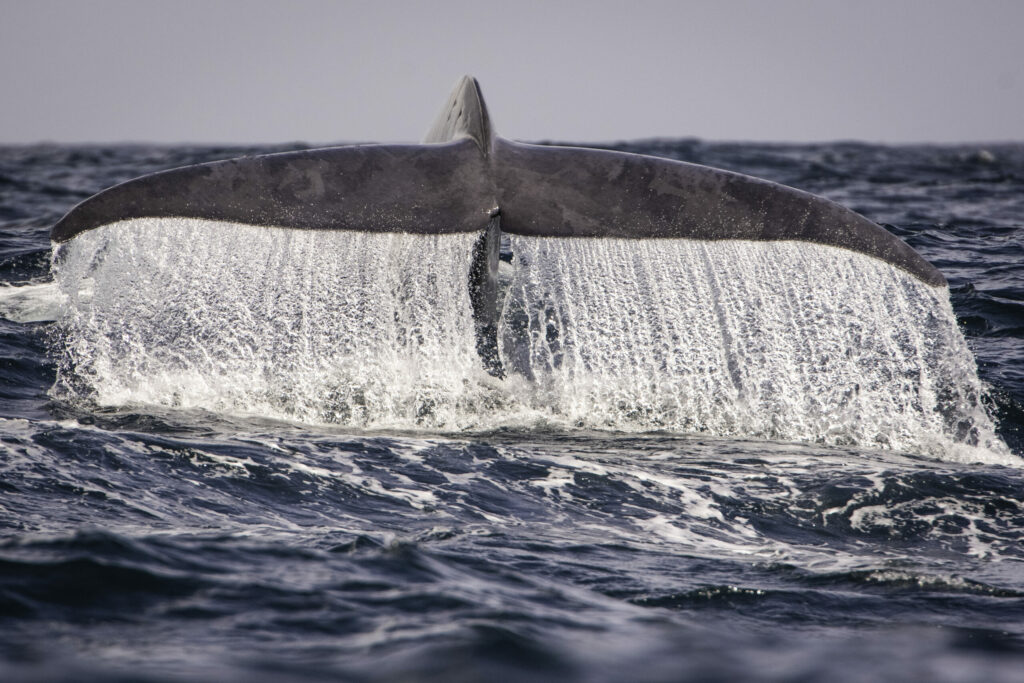
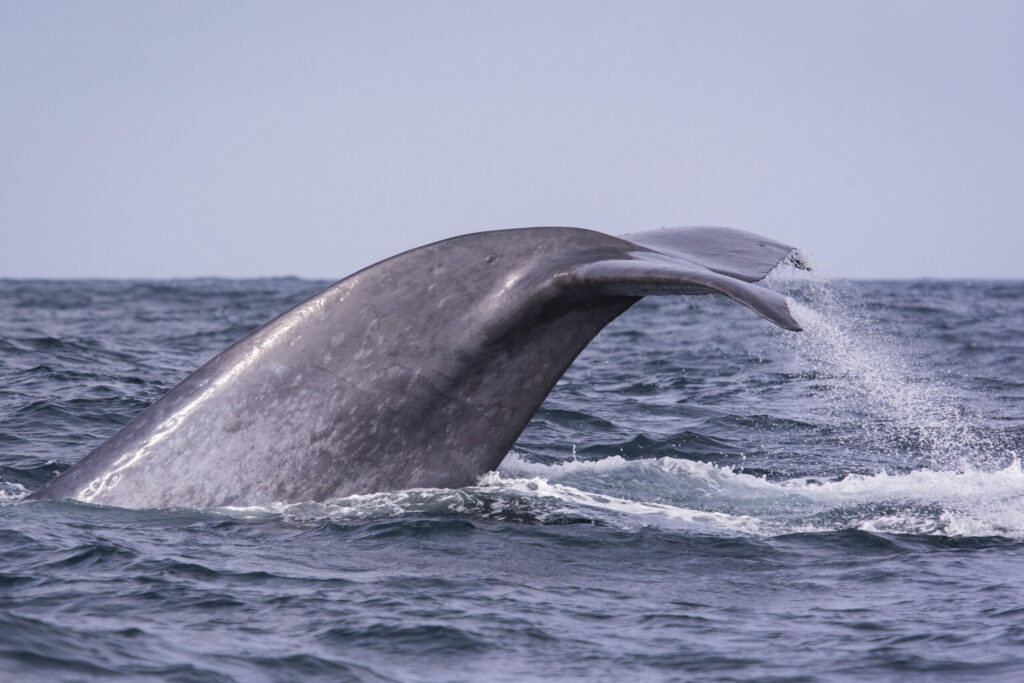
Blue whales feed almost exclusively on krill, consuming up to 4 tonnes a day during the feeding season. Their flukes are large and broad, and while they are sometimes raised during a dive, they usually emerge at a shallow angle. Although they are typically solitary travellers, they are occasionally seen in small groups or in the company of other rorquals, such as Fin whales.
The body is a beautiful mottled blue-grey, appearing vibrant aquamarine when seen through the water. This mottling pattern is unique to each whale, like a fingerprint, allowing for photo-identification. Historically, sailors called them "Sulphur-bottoms" because their bellies can appear yellowish in cold waters due to an accumulation of microscopic diatoms. From above, the head is broad and U-shaped (resembling a Gothic arch), with a single longitudinal ridge. They have 55 to 88 ventral pleats extending to the umbilicus. The dorsal fin is tiny (only about 33 cm high) and set very far back; it is rarely seen at the same time as the blowholes. The blow is spectacular: a narrow, vertical column of spray reaching up to 9–12 m in height.
Blue whales feed almost exclusively on krill, consuming up to 4 tonnes a day during the feeding season. Their flukes are large and broad, and while they are sometimes raised during a dive, they usually emerge at a shallow angle. Although they are typically solitary travellers, they are occasionally seen in small groups or in the company of other rorquals, such as Fin whales.
observation
Blue whales are a wide-ranging species found in all oceans. In the Azores, they are considered one of the highlights of the spring season. While they can be confused with Fin whales, the Blue whale's mottled pigmentation and its distinctly U-shaped head are key differentiators. Furthermore, the Fin whale has a significantly larger and more prominent dorsal fin.
Azores sightings have seen a remarkable shift: once recorded in only 5% of trips, they have been sighted in 16% of Espaço Talassa’s excursions since 2014. This increase is likely due to either a population recovery in the North Atlantic or a variation in their migration paths that brings them closer to the south coast of Pico. Sightings usually begin in March and last until June, with the peak occurring in April and May.
Azores sightings have seen a remarkable shift: once recorded in only 5% of trips, they have been sighted in 16% of Espaço Talassa’s excursions since 2014. This increase is likely due to either a population recovery in the North Atlantic or a variation in their migration paths that brings them closer to the south coast of Pico. Sightings usually begin in March and last until June, with the peak occurring in April and May.
names
PT: Baleia-azul
AZORES: Baleia-azul (Note: Finbeque is sometimes used locally, but this species is usually distinguished by its proper name)
ENG: Blue whale
FR: Baleine bleue
DE: Blauwal
IT: Balenottera azzurra
ESP: Ballena azul
NL: Blauwe vinvis
AZORES: Baleia-azul (Note: Finbeque is sometimes used locally, but this species is usually distinguished by its proper name)
ENG: Blue whale
FR: Baleine bleue
DE: Blauwal
IT: Balenottera azzurra
ESP: Ballena azul
NL: Blauwe vinvis
Scientific name
Balaenoptera musculus
Discovery
Linnaeus, 1758