
Bryde’s whale
Balaenoptera edeni
biology
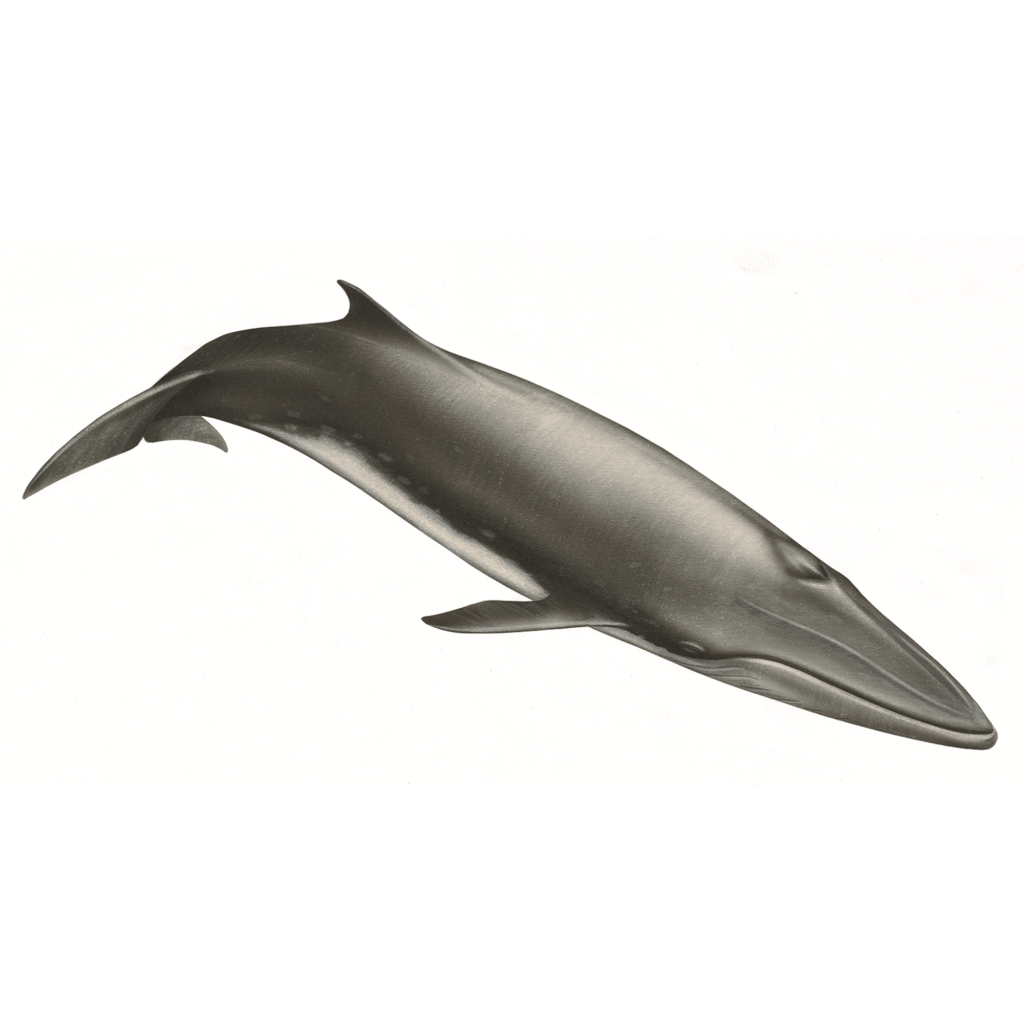
Newborn Bryde’s whales are about 4 m long. Adults typically measure between 11.5 m and 14.5 m (with some records up to 15.5 m), and weigh between 12 and 20 tonnes. The baleen plates, numbering 250 to 370 on each side of the mouth, are grey and vary in size according to the individual.
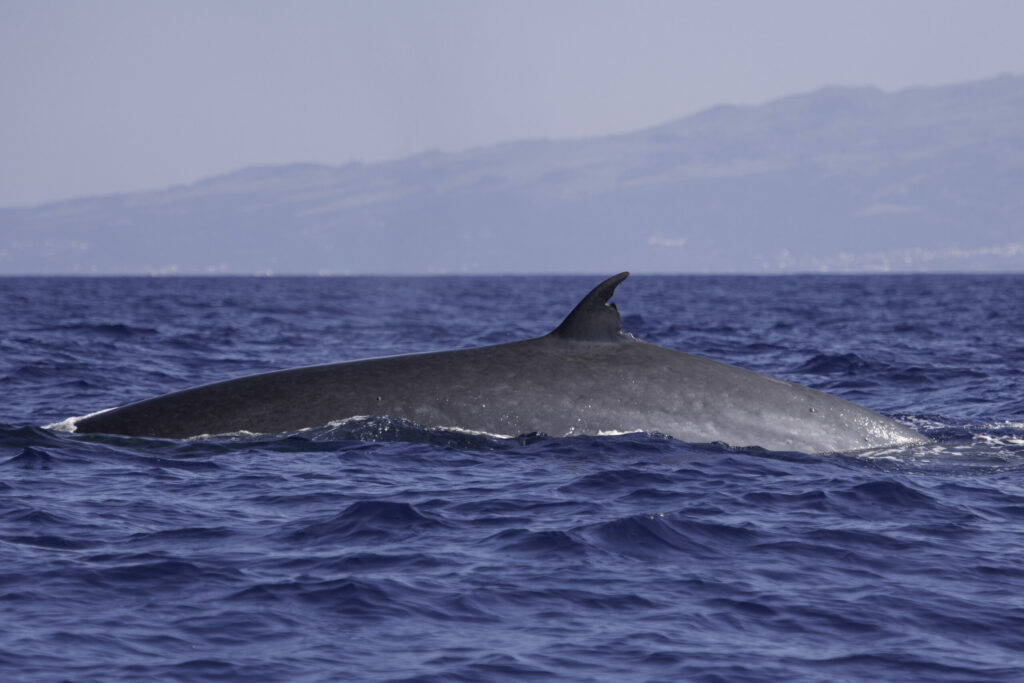
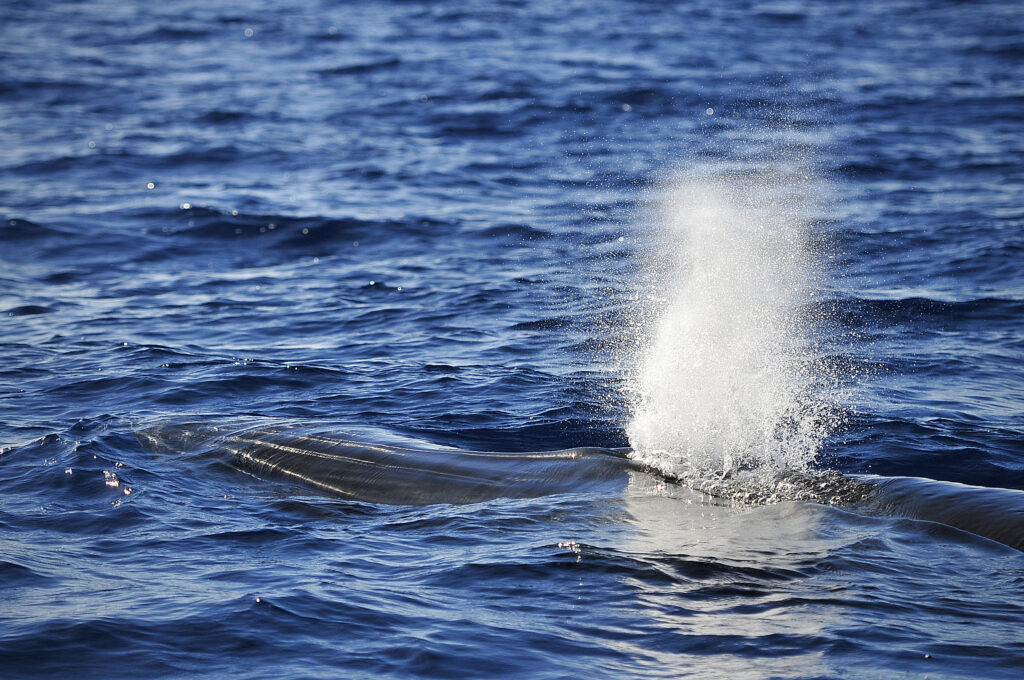
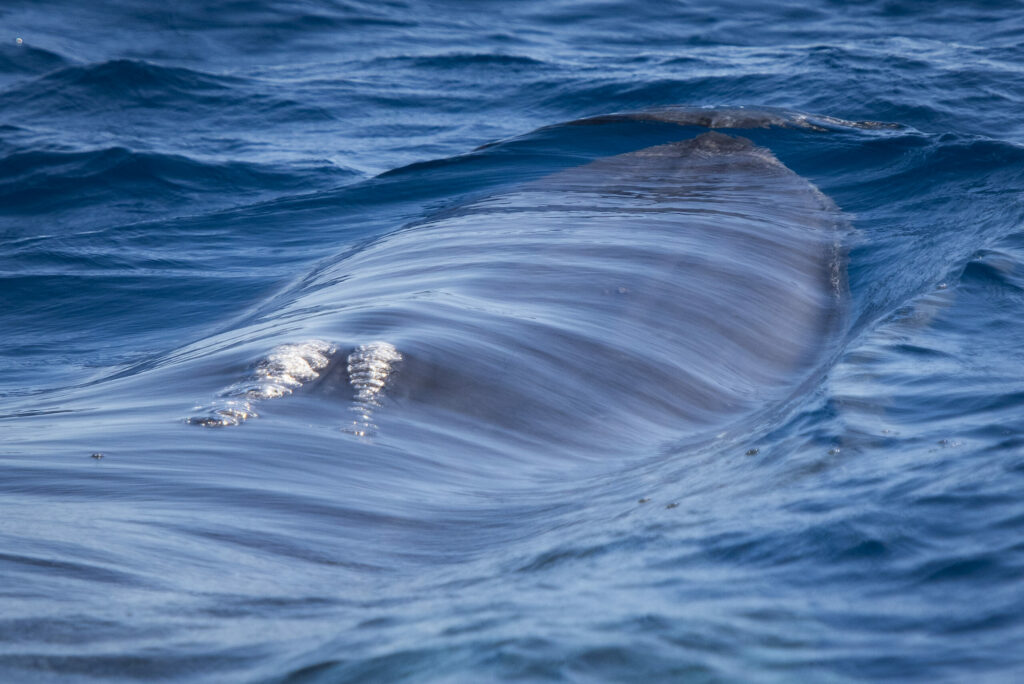
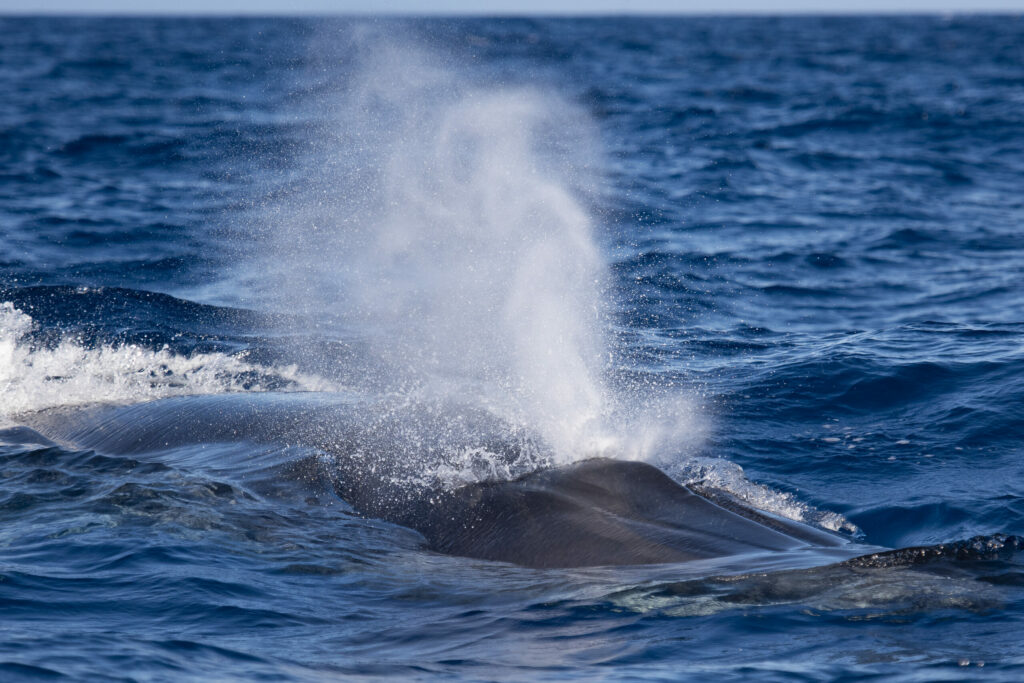
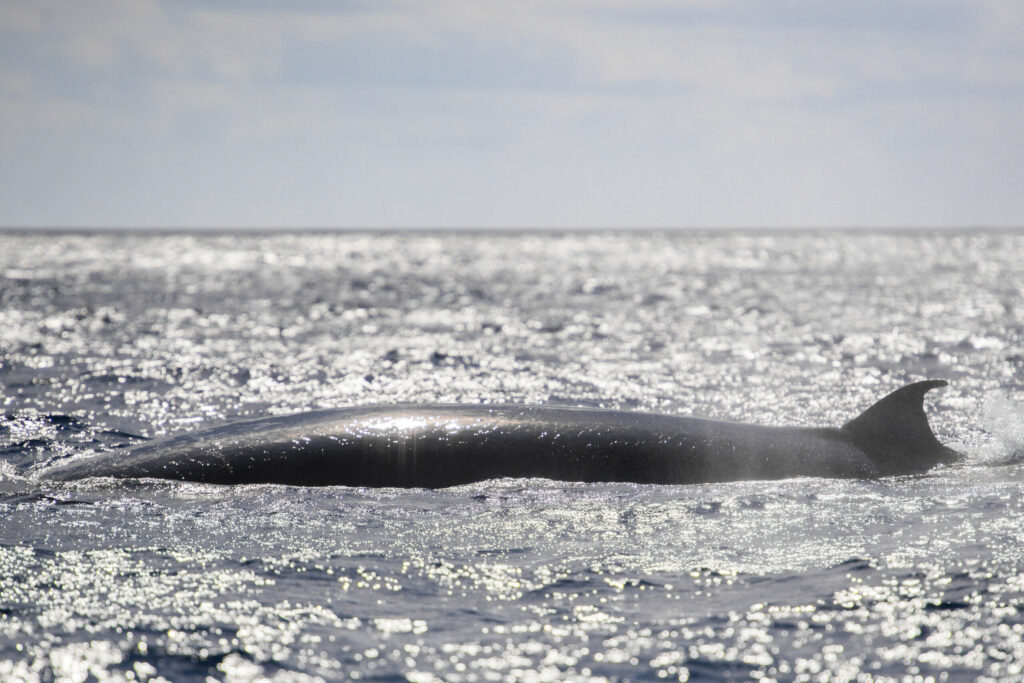
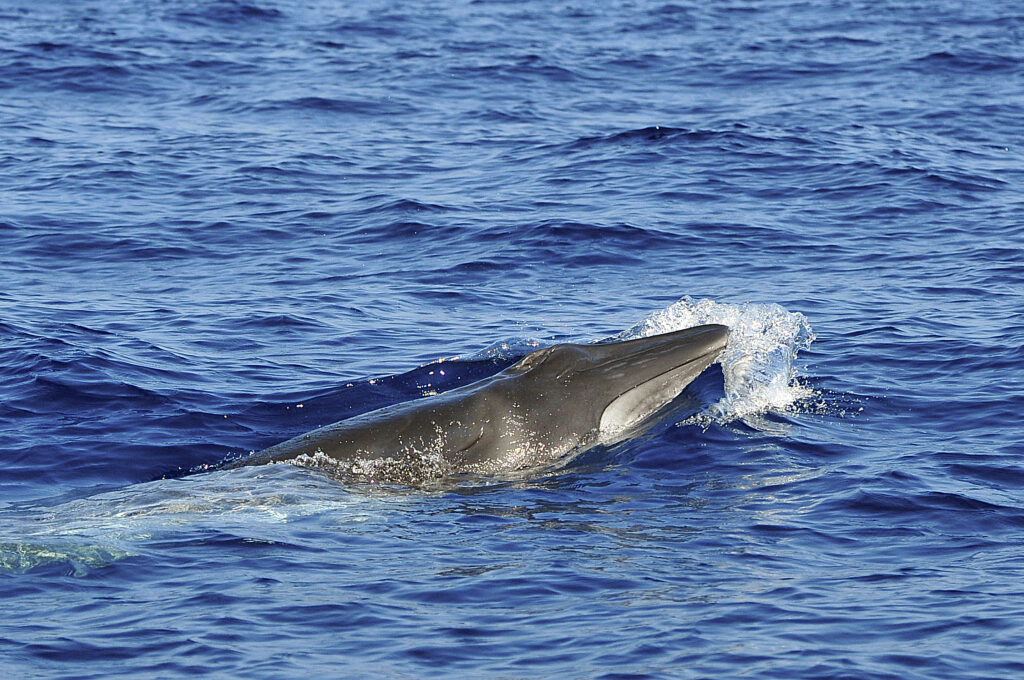
Bryde’s whales have a medium to large, streamlined body that is dark grey (smoky grey) dorsally and white or cream on the underside, sometimes with a pinkish tone. A unique and definitive identification feature is the presence of three longitudinal ridges on top of the head; all other rorquals possess only one. The dorsal fin is tall, very falcate, and often has a notched or irregular trailing edge. There are 40 to 70 ventral pleats extending to the navel or beyond. Bryde’s whales have a columnar or bushy blow (3–4 m tall), though they occasionally exhale underwater. When diving, they strongly arch their tail stock (peduncle), which distinguishes them from Sei whales, although they rarely lift their flukes out of the water.
They feed year-round (unlike migratory rorquals) on small schooling fish and occasionally krill, primarily using the lunge feeding technique. Their behavior can be quite active, often making sudden changes of direction or breaching (up to 70 times recorded). They are unique among rorquals as they do not perform long-distance migrations, spending their entire lives in tropical and subtropical waters. Consequently, they lack a distinct breeding season, mating and calving year-round.
Bryde’s whales have a medium to large, streamlined body that is dark grey (smoky grey) dorsally and white or cream on the underside, sometimes with a pinkish tone. A unique and definitive identification feature is the presence of three longitudinal ridges on top of the head; all other rorquals possess only one. The dorsal fin is tall, very falcate, and often has a notched or irregular trailing edge. There are 40 to 70 ventral pleats extending to the navel or beyond. Bryde’s whales have a columnar or bushy blow (3–4 m tall), though they occasionally exhale underwater. When diving, they strongly arch their tail stock (peduncle), which distinguishes them from Sei whales, although they rarely lift their flukes out of the water.
They feed year-round (unlike migratory rorquals) on small schooling fish and occasionally krill, primarily using the lunge feeding technique. Their behavior can be quite active, often making sudden changes of direction or breaching (up to 70 times recorded). They are unique among rorquals as they do not perform long-distance migrations, spending their entire lives in tropical and subtropical waters. Consequently, they lack a distinct breeding season, mating and calving year-round.
observation
Bryde’s whales occur in all oceans in tropical and warm temperate waters, usually preferring temperatures above 20°C. They are easily confused with Sei whales (Balaenoptera borealis); however, at close range, the latter is recognized by having only one rostral ridge instead of three. Furthermore, Sei whales have much finer, silkier baleen fringes. Observed at a distance, it is nearly impossible to distinguish the two species.
In the Azores, Bryde’s whales are considered rare visitors. Their presence is episodic and often associated with warmer years or warm currents moving north. The first confirmed sighting by the Espaço Talassa team occurred in July 2004. Subsequent encounters were recorded in 2010, 2013-2015, and 2017. Most sightings occur in July and August, when waters are warmest. The exception was 2013, a peak year with 16 encounters. In 2017, although sightings were fewer, the "season" was longer, with observations spanning from July to October. Historically, the difficulty in distinguishing them from Sei whales and the lack of knowledge about their range likely led to misidentifications in the past.
In the Azores, Bryde’s whales are considered rare visitors. Their presence is episodic and often associated with warmer years or warm currents moving north. The first confirmed sighting by the Espaço Talassa team occurred in July 2004. Subsequent encounters were recorded in 2010, 2013-2015, and 2017. Most sightings occur in July and August, when waters are warmest. The exception was 2013, a peak year with 16 encounters. In 2017, although sightings were fewer, the "season" was longer, with observations spanning from July to October. Historically, the difficulty in distinguishing them from Sei whales and the lack of knowledge about their range likely led to misidentifications in the past.
names
PT: Baleia-de-bryde (ou Rorqual-tropical)
ENG: Bryde’s whale (or Tropical whale)
FR: Rorqual de Bryde (ou Rorqual tropical)
DE: Brydewal
IT: Balenottera di Eden
ESP: Rorcual de Bryde (ou Rorcual tropical)
NL: Edens vinvis
ENG: Bryde’s whale (or Tropical whale)
FR: Rorqual de Bryde (ou Rorqual tropical)
DE: Brydewal
IT: Balenottera di Eden
ESP: Rorcual de Bryde (ou Rorcual tropical)
NL: Edens vinvis
Scientific name
Balaenoptera edeni
Discovery
Anderson 1879