

Humpback whale
Megaptera novaeangliae
biology
Newborn humpback whales are about 4.5 m long and weigh approximately 680 kg. Adults typically reach lengths of 11.5–15 m, with females being slightly larger than males. Their weight generally ranges between 25 and 30 tonnes. They possess 270 to 400 baleen plates on each side of the mouth, which are primarily black. Their lifespan is estimated to be around 60 to 80 years.
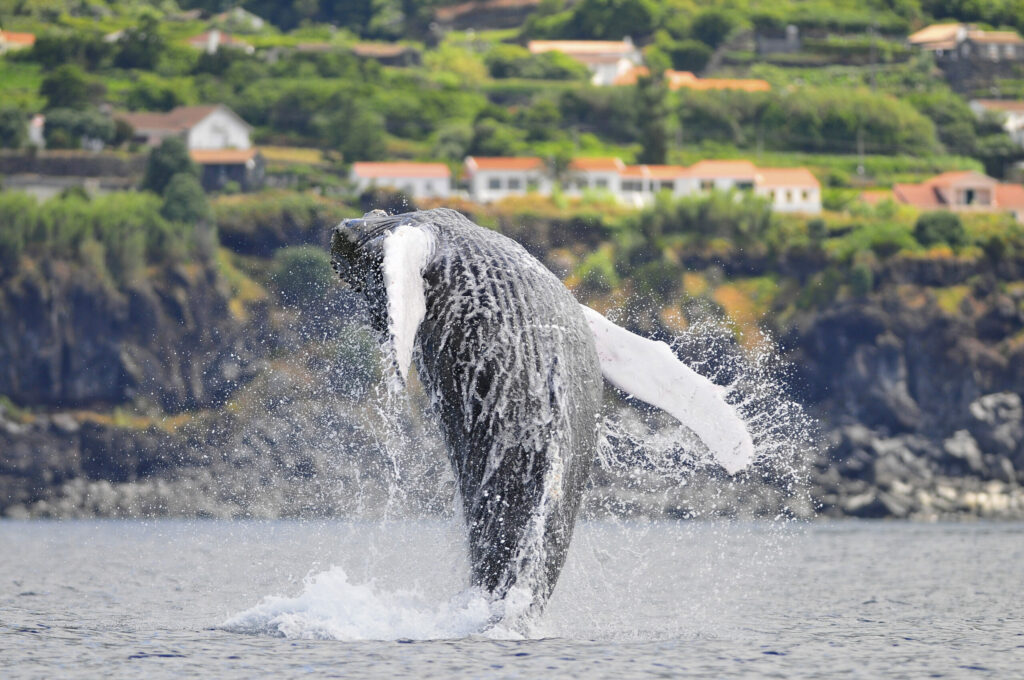
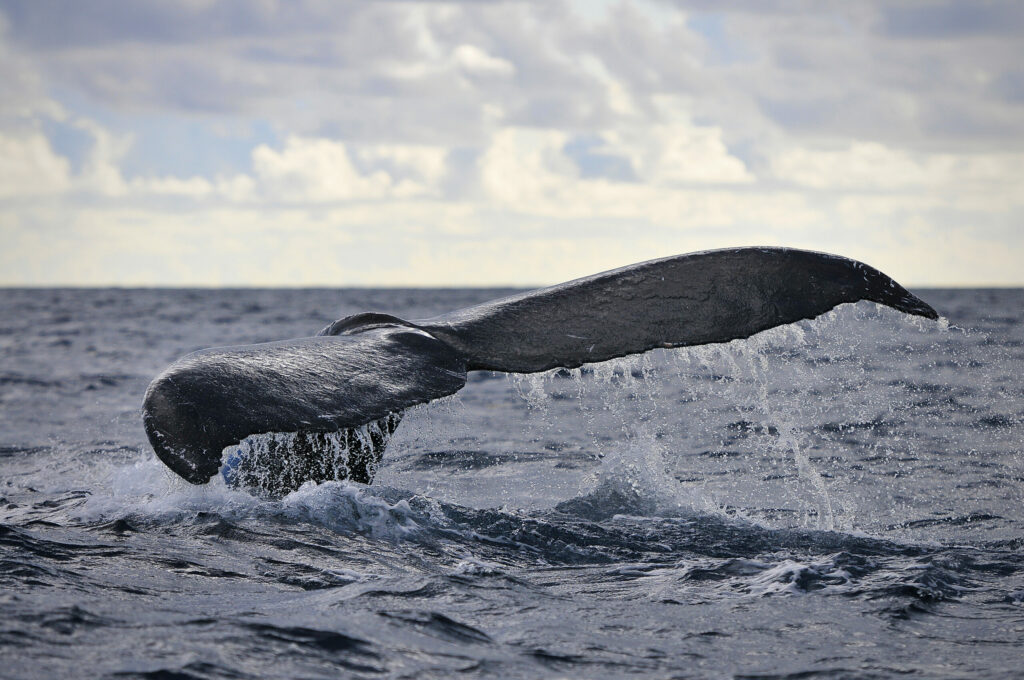
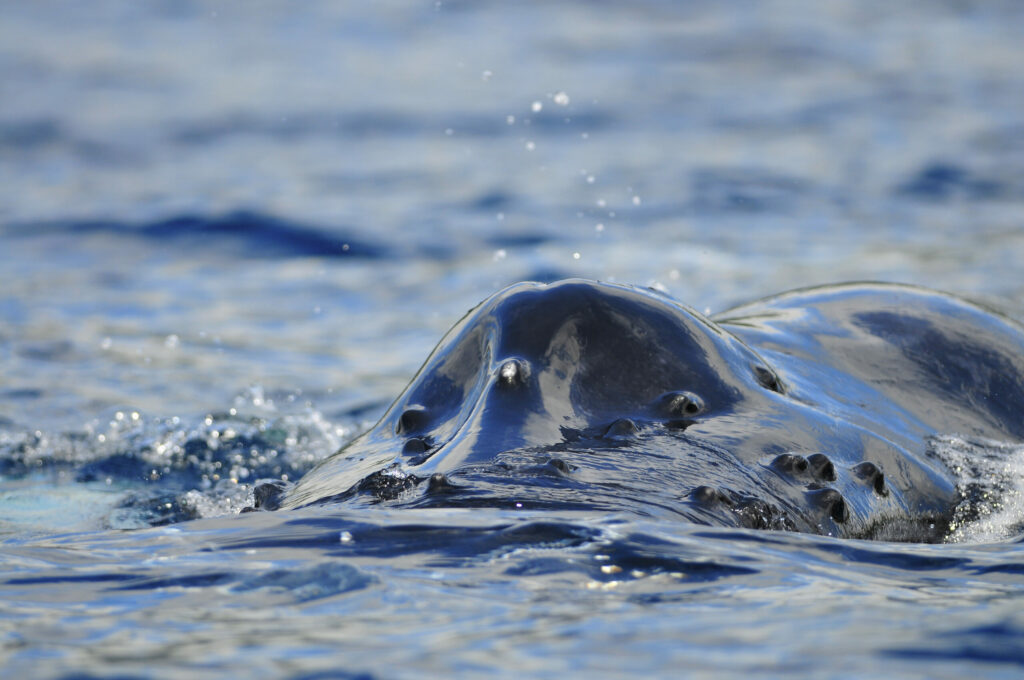
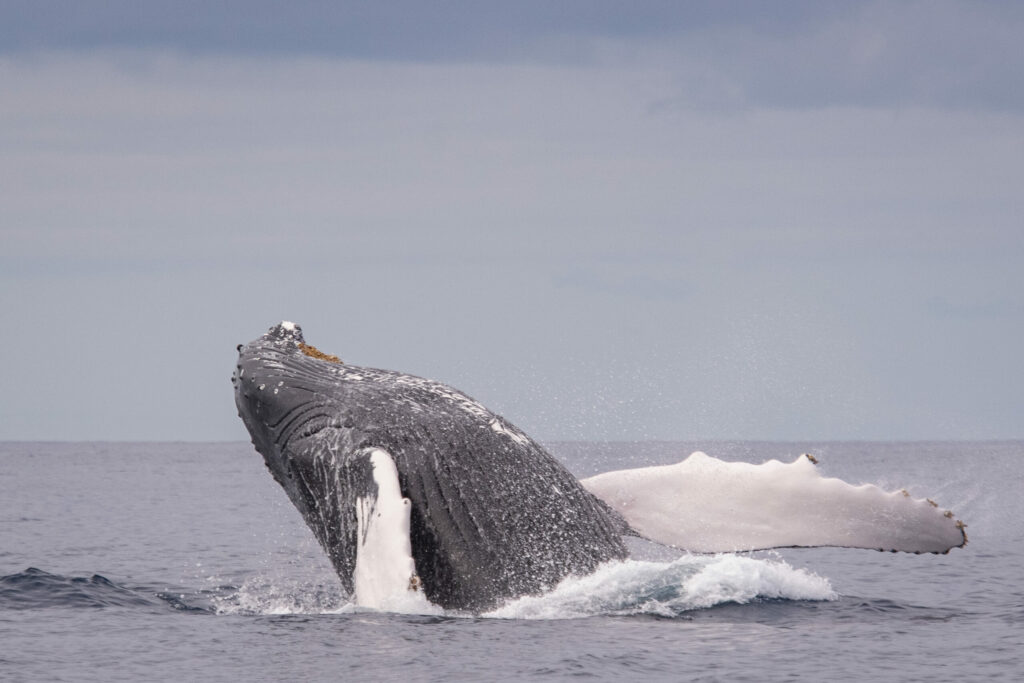
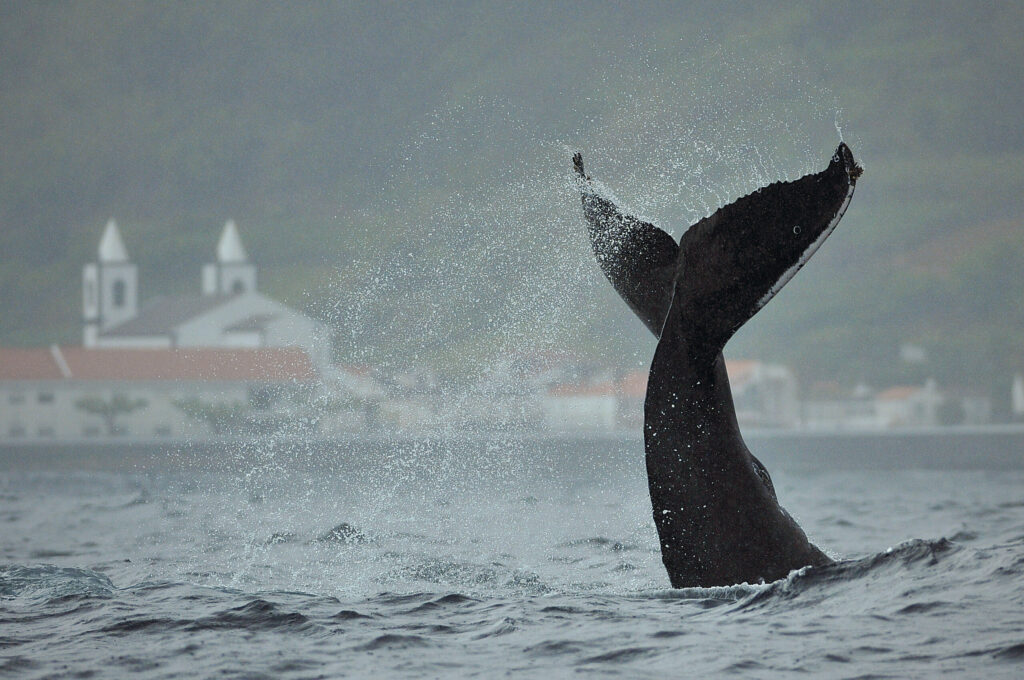
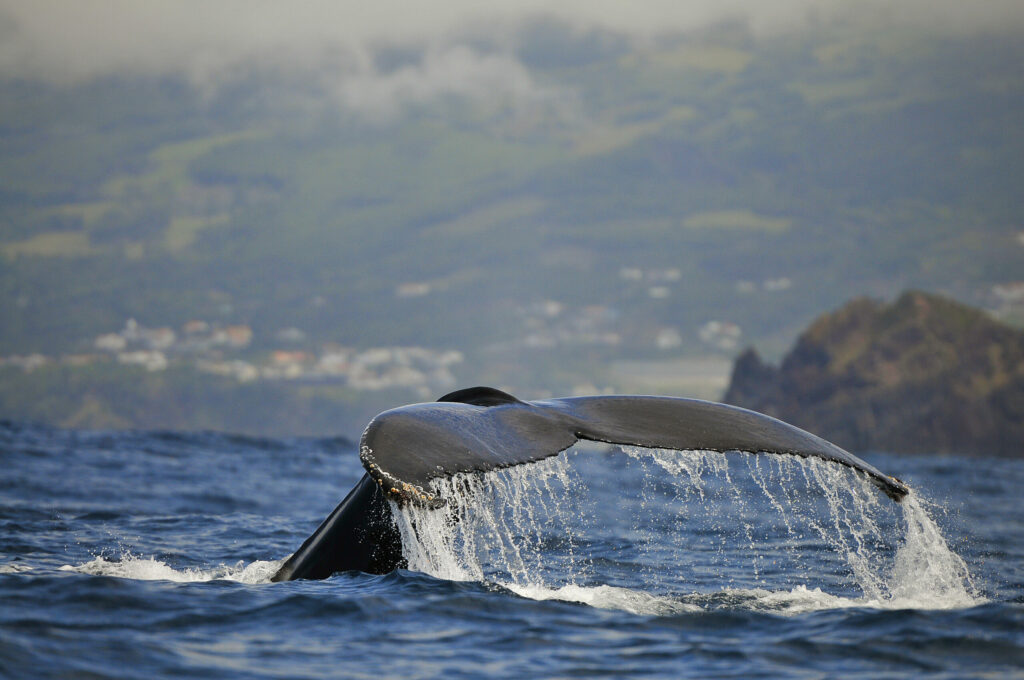
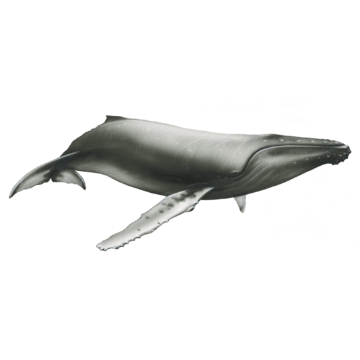
The humpback whale has a robust, powerful body, black or dark greyish-brown above and white below. A defining characteristic is the series of rounded protuberances (tubercles) on the head and lower jaw; each of these nodules contains a single thick hair, likely serving a sensory function. Their ventral pleats (14–22) are fewer and wider than in other rorquals, extending to the umbilicus. Their most striking feature is the exceptionally long flippers (up to 1/3 of the body length), which are primarily white in North Atlantic populations and feature a series of bumps along the leading edge. The dorsal fin is variable, often small or hooked, and typically sits on a noticeable "hump" that becomes prominent when the whale arches its back to dive. The tail flukes have a unique serrated trailing edge and a black-and-white pattern on the underside that acts as a "fingerprint" for photo-identification.
Humpbacks are the most acrobatic of the baleen whales, frequently performing breaches, lobtails, and flipper slaps. They are also known for their complex songs and sophisticated cooperative feeding techniques, such as bubble-net feeding. Although they raise their flukes almost every time they dive, their blow is relatively low and bushy (approx. 3 m).
The humpback whale has a robust, powerful body, black or dark greyish-brown above and white below. A defining characteristic is the series of rounded protuberances (tubercles) on the head and lower jaw; each of these nodules contains a single thick hair, likely serving a sensory function. Their ventral pleats (14–22) are fewer and wider than in other rorquals, extending to the umbilicus. Their most striking feature is the exceptionally long flippers (up to 1/3 of the body length), which are primarily white in North Atlantic populations and feature a series of bumps along the leading edge. The dorsal fin is variable, often small or hooked, and typically sits on a noticeable "hump" that becomes prominent when the whale arches its back to dive. The tail flukes have a unique serrated trailing edge and a black-and-white pattern on the underside that acts as a "fingerprint" for photo-identification.
Humpbacks are the most acrobatic of the baleen whales, frequently performing breaches, lobtails, and flipper slaps. They are also known for their complex songs and sophisticated cooperative feeding techniques, such as bubble-net feeding. Although they raise their flukes almost every time they dive, their blow is relatively low and bushy (approx. 3 m).
observation
Humpback whales are found in all the world's oceans, following long migration routes between high-latitude summer feeding grounds (Iceland, Norway, Greenland) and tropical winter nursing grounds (Cape Verde, Caribbean).
In the Azores, they are considered migratories. Historically rare, sightings have increased in recent years to an average of 7.5% of Espaço Talassa’s trips. They are most frequently observed between April and June. When they find a good foraging area south of Pico, some individuals may remain in the area for several days to feed before continuing their journey north. Because they are curious and highly active at the surface, they are one of the most rewarding species to observe.
In the Azores, they are considered migratories. Historically rare, sightings have increased in recent years to an average of 7.5% of Espaço Talassa’s trips. They are most frequently observed between April and June. When they find a good foraging area south of Pico, some individuals may remain in the area for several days to feed before continuing their journey north. Because they are curious and highly active at the surface, they are one of the most rewarding species to observe.
names
PT: Baleia-de-bossa (ou Baleia-de-bossas)
AZORES: Ampebeque (ou "Humpback")
ENG: Humpback whale
FR: Baleine à bosse (ou Mégaptère)
DE: Buckelwal
IT: Megattera
ESP: Yubarta (ou Ballena jorobada)
NL: Bultrug
AZORES: Ampebeque (ou "Humpback")
ENG: Humpback whale
FR: Baleine à bosse (ou Mégaptère)
DE: Buckelwal
IT: Megattera
ESP: Yubarta (ou Ballena jorobada)
NL: Bultrug
Scientific name
Megaptera novaeangliae
Discovery
Borowski, 1781