



Short-beaked common dolphin
Delphinus delphis
biology
Newborn common dolphins are between 0.8 m and 1 m long. Adults range from 1.7 m up to 2.4 m in length and typically weigh between 70 and 110 kg. They have 41 to 57 pairs of small, sharply pointed teeth in each jaw. Their lifespan is estimated to be between 25 and 30 years.
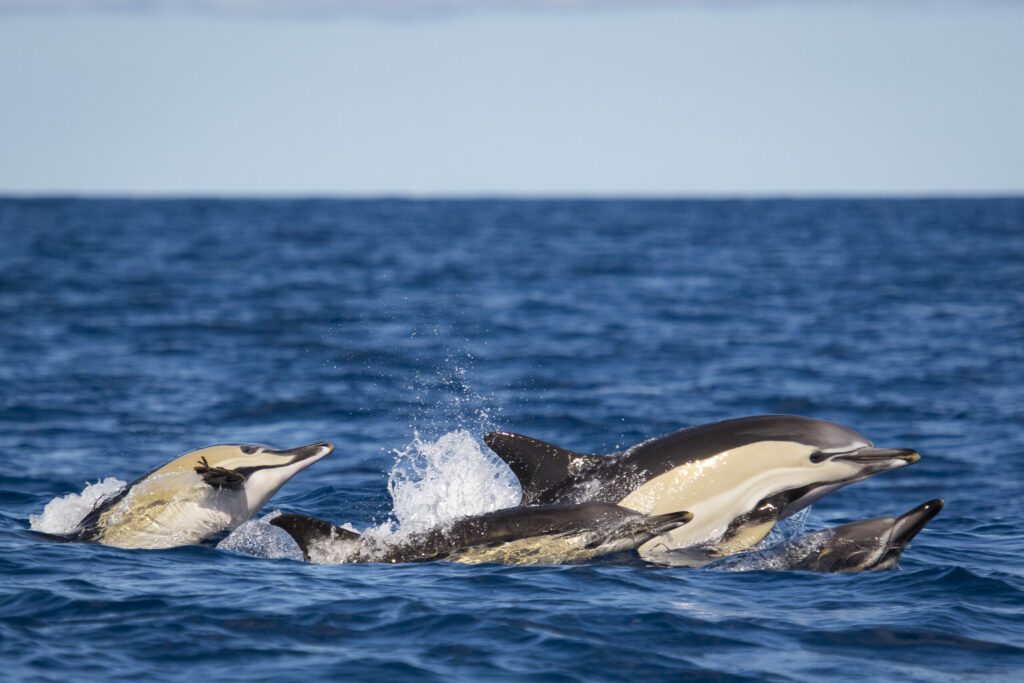
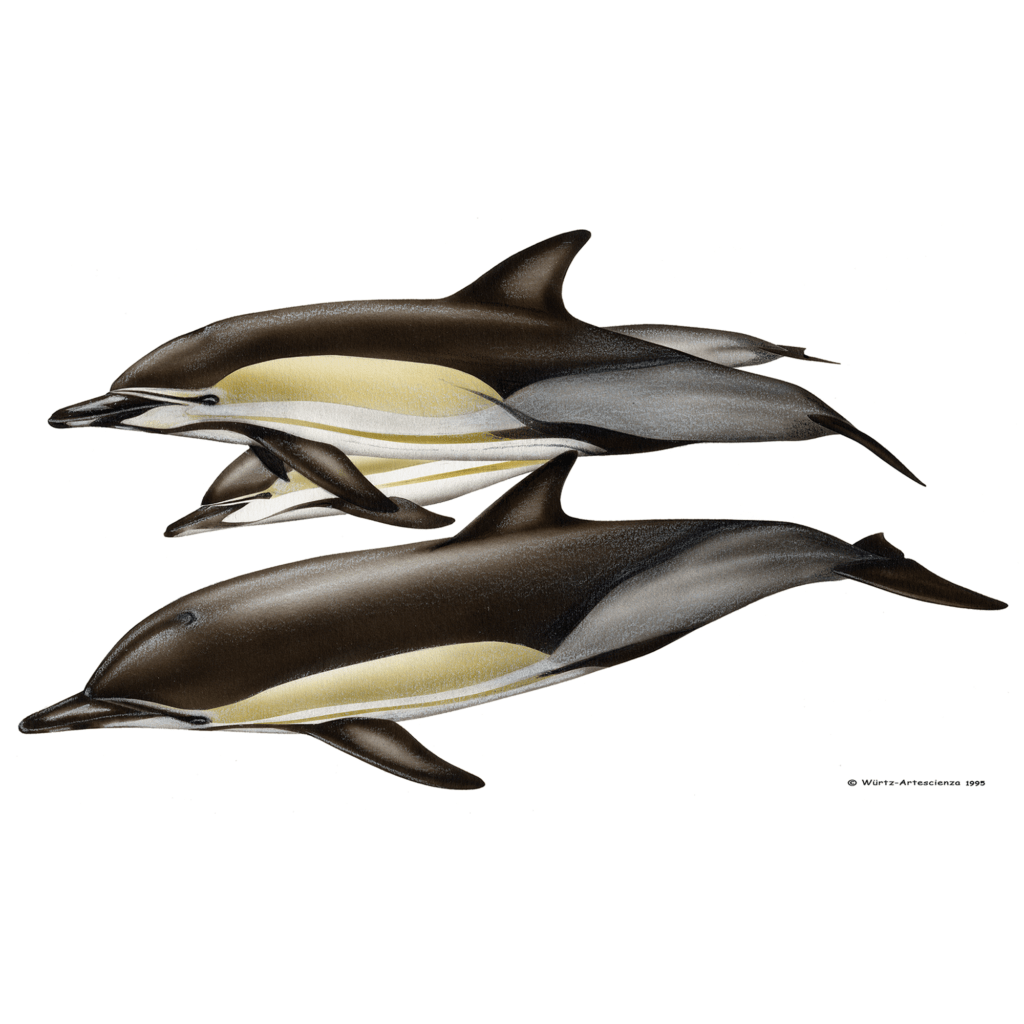
This species is famous for its striking and unique "hourglass" color pattern on the flanks: a bright yellow or tan patch between the eye and the dorsal fin, and a light grey patch between the dorsal fin and the tail. The back is dark brownish-grey with a characteristic inverted "V" saddle directly below the dorsal fin. The belly is white. While most individuals follow this pattern, some may appear darker where the yellow patch should be. Their scientific name, Delphinus delphis, translates simply to "Dolphin of Dolphins," reflecting their status as the classic cetacean of ancient mythology.
Common dolphins feed primarily on epipelagic schooling fish (such as sardines and mackerel) and squid, often performing foraging dives as deep as 200 m. In the Azores, they typically travel in medium-sized, cohesive groups of 30 to 50 individuals, though super-pods of hundreds are sometimes recorded. They are highly social and frequently form mixed-species groups with Striped, Spotted, and Bottlenose dolphins. They are prolific bow-riders, though they may become more cautious when a high number of calves are present in the pod.
This species is famous for its striking and unique "hourglass" color pattern on the flanks: a bright yellow or tan patch between the eye and the dorsal fin, and a light grey patch between the dorsal fin and the tail. The back is dark brownish-grey with a characteristic inverted "V" saddle directly below the dorsal fin. The belly is white. While most individuals follow this pattern, some may appear darker where the yellow patch should be. Their scientific name, Delphinus delphis, translates simply to "Dolphin of Dolphins," reflecting their status as the classic cetacean of ancient mythology.
Common dolphins feed primarily on epipelagic schooling fish (such as sardines and mackerel) and squid, often performing foraging dives as deep as 200 m. In the Azores, they typically travel in medium-sized, cohesive groups of 30 to 50 individuals, though super-pods of hundreds are sometimes recorded. They are highly social and frequently form mixed-species groups with Striped, Spotted, and Bottlenose dolphins. They are prolific bow-riders, though they may become more cautious when a high number of calves are present in the pod.
observation
The common dolphin is a cosmopolitan species, found in all oceans. While it shares some ranges with the Long-beaked common dolphin (Delphinus capensis), the latter has a more muted pattern and has not yet been formally recorded in the Azores.
In the archipelago, common dolphins are a resident species, present year-round and spotted on average in 65% of all trips—making them the most frequently encountered cetacean south of Pico. However, there is a clear seasonal pattern: sightings peak in the Spring (March to June) and decrease during the summer (July to September). This shift is likely due to the arrival of Atlantic spotted dolphins in large numbers, which increases competition for food and space.
In the archipelago, common dolphins are a resident species, present year-round and spotted on average in 65% of all trips—making them the most frequently encountered cetacean south of Pico. However, there is a clear seasonal pattern: sightings peak in the Spring (March to June) and decrease during the summer (July to September). This shift is likely due to the arrival of Atlantic spotted dolphins in large numbers, which increases competition for food and space.
names
PT: Golfinho-comum
AÇORES: Toninha-mansa
ENG: Short-beaked common dolphin
FR: Dauphin commun à bec court
DE: Gewöhnlicher Delfin
IT: Delfino comune
ESP: Delfín común oceánico
NL: Gewone dolfijn
AÇORES: Toninha-mansa
ENG: Short-beaked common dolphin
FR: Dauphin commun à bec court
DE: Gewöhnlicher Delfin
IT: Delfino comune
ESP: Delfín común oceánico
NL: Gewone dolfijn
Scientific name
Delphinus delphis
Discovery
Linnaeus, 1758