
Common Minke Whale
Balaenoptera acutorostrata
biology
The Minke whale is the smallest and most abundant member of the rorqual family. At birth, calves measure between 2.4 m and 2.8 m. Adults typically reach lengths of 7–10 m—with females being slightly larger than males—and weigh between 5 and 15 tonnes.
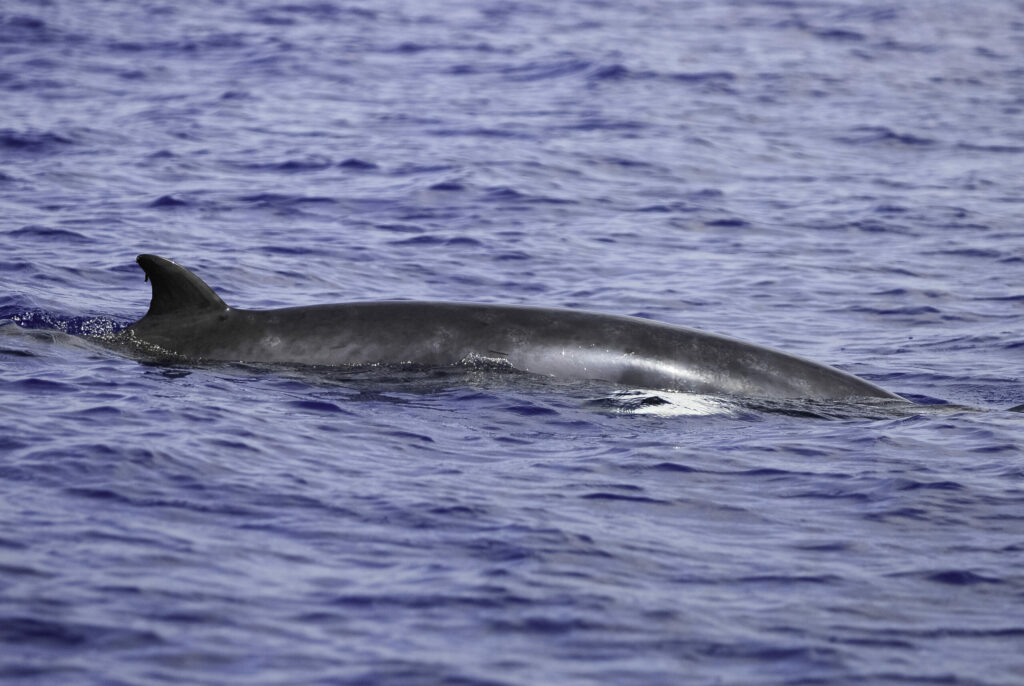
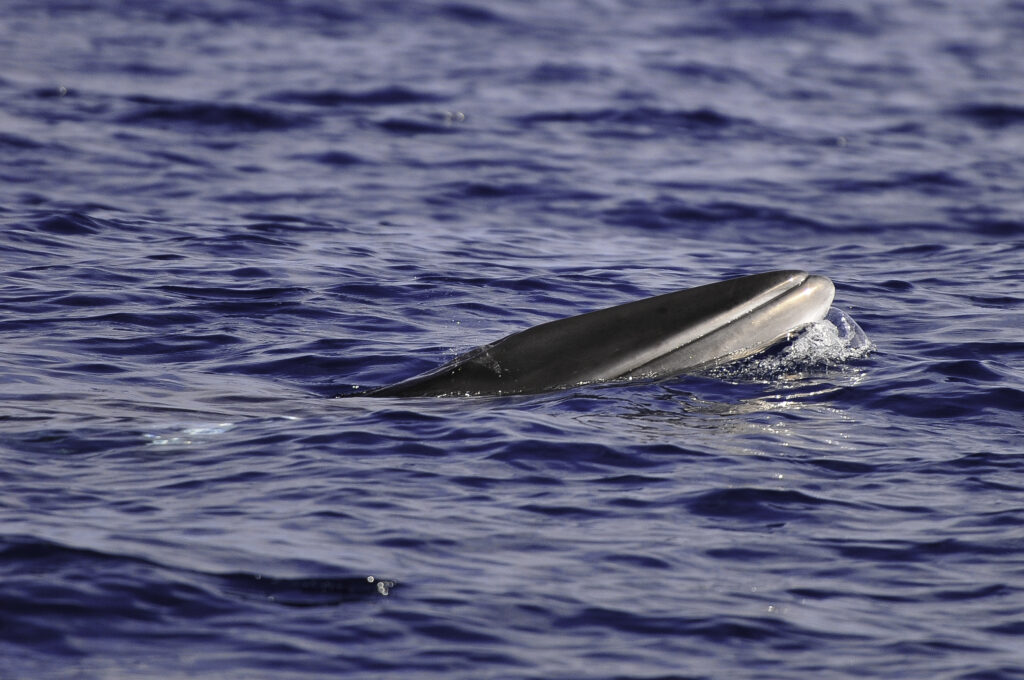
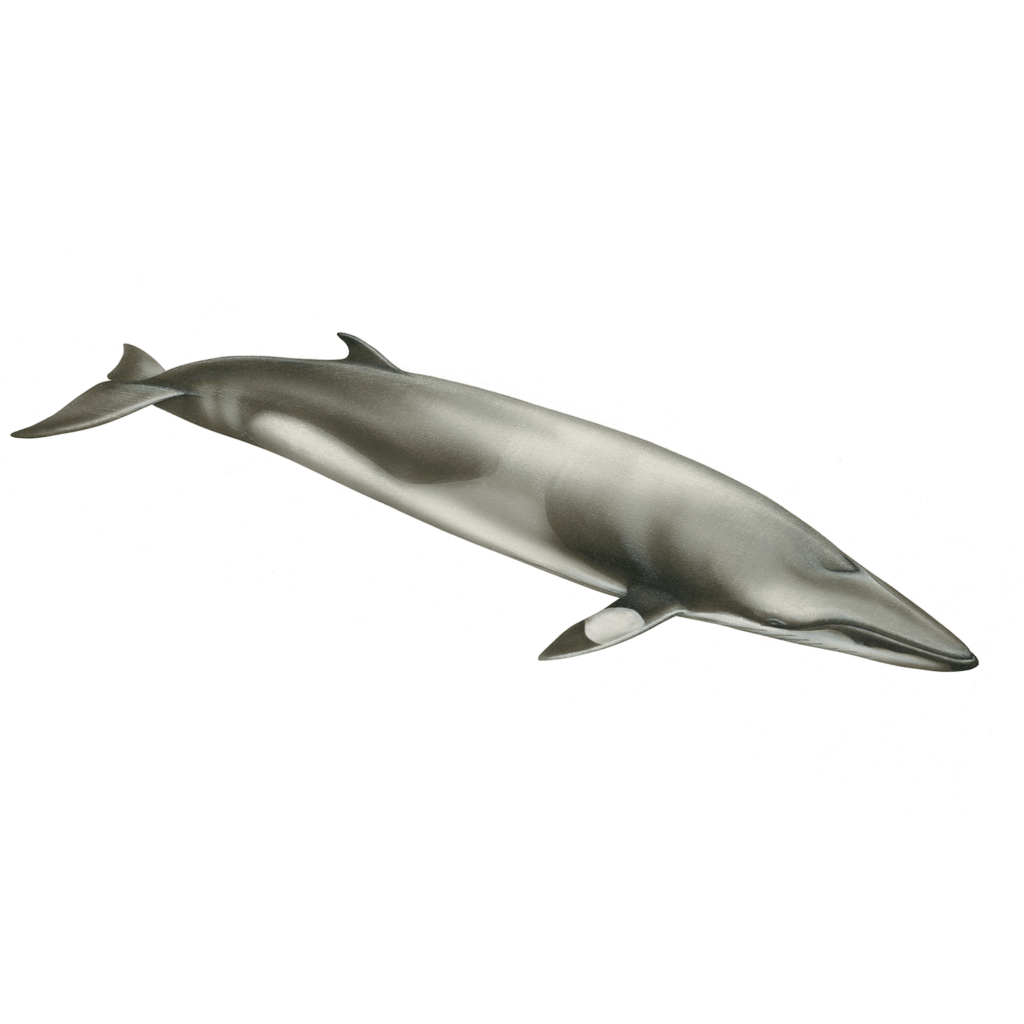
They are characterized by a slender, streamlined body and a narrow, sharply pointed, V-shaped head (as seen from above) with a single longitudinal ridge on the snout. Their coloration is black or dark grey on the back, and white or pale grey on the belly. A defining feature of the Northern Hemisphere population is the distinctive white band across each pectoral flipper, a key identification mark.
Inside their mouths, they have 230 to 360 short baleen plates per side (usually cream or white), which they use to filter small schooling fish. Their estimated lifespan is around 50 years. Interestingly, the Minke whale is currently the only rorqual species still hunted commercially in some regions of the North Atlantic and Pacific.
They are characterized by a slender, streamlined body and a narrow, sharply pointed, V-shaped head (as seen from above) with a single longitudinal ridge on the snout. Their coloration is black or dark grey on the back, and white or pale grey on the belly. A defining feature of the Northern Hemisphere population is the distinctive white band across each pectoral flipper, a key identification mark.
Inside their mouths, they have 230 to 360 short baleen plates per side (usually cream or white), which they use to filter small schooling fish. Their estimated lifespan is around 50 years. Interestingly, the Minke whale is currently the only rorqual species still hunted commercially in some regions of the North Atlantic and Pacific.
observation
Minke whales are found worldwide, from tropical to polar waters. In the Azores, they are seasonal visitors, most frequently sighted during late spring and early summer (peaking between April and June). They are not as common in the archipelago as larger rorquals; for instance, the Espaço Talassa team records an average of only 1–3 sightings per year.
Key Identification Tips:
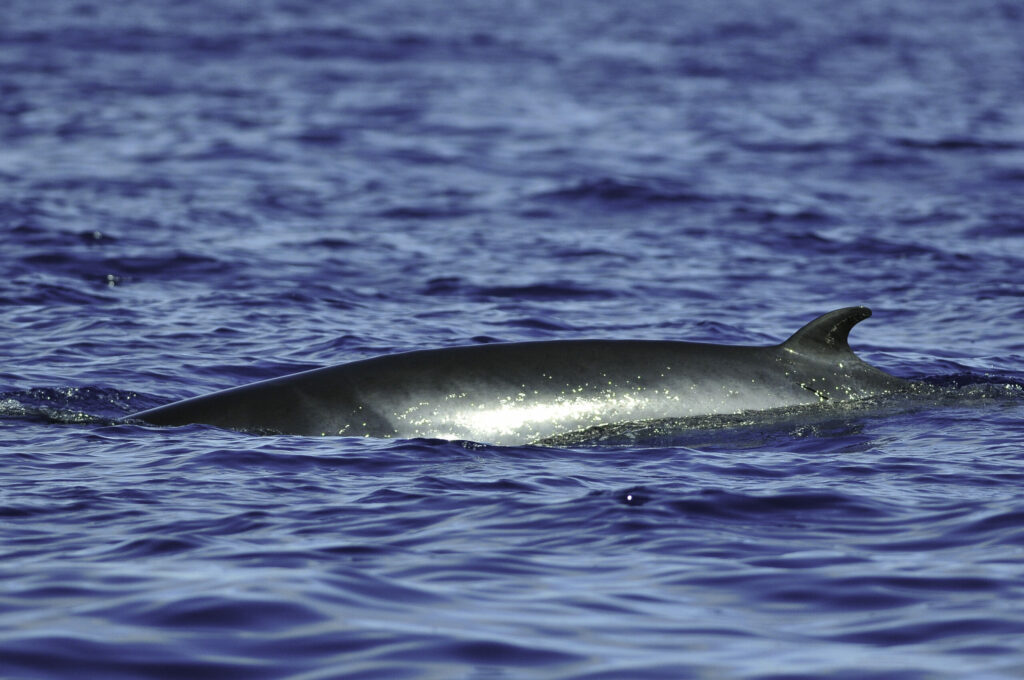
The Surface Sequence: A unique trait of the Minke is that the snout and the falcate dorsal fin appear simultaneously when surfacing. The blow is low (approx. 2 m), indistinct, and often invisible, though it may be heard on very calm days.
The Dive: They arch their backs before a deep dive but do not raise their flukes (tail) out of the water. Their movements underwater are fast and often unpredictable.
Behavior: They can be quite curious ("inquisitive") and may approach stationary boats to investigate, but they are also known to disappear suddenly without leaving a trace (no "fluke prints").
Distinction: Their small size and the white flipper band are the best ways to distinguish them from the calves of larger rorquals—such as Fin (Balaenoptera physalus) or Sei whales (Balaenoptera borealis)—which lack this white marking.
Key Identification Tips:
The Surface Sequence: A unique trait of the Minke is that the snout and the falcate dorsal fin appear simultaneously when surfacing. The blow is low (approx. 2 m), indistinct, and often invisible, though it may be heard on very calm days.
The Dive: They arch their backs before a deep dive but do not raise their flukes (tail) out of the water. Their movements underwater are fast and often unpredictable.
Behavior: They can be quite curious ("inquisitive") and may approach stationary boats to investigate, but they are also known to disappear suddenly without leaving a trace (no "fluke prints").
Distinction: Their small size and the white flipper band are the best ways to distinguish them from the calves of larger rorquals—such as Fin (Balaenoptera physalus) or Sei whales (Balaenoptera borealis)—which lack this white marking.
names
PT: Baleia-anã
ENG: Minke whale
FR: Petit rorqual
DE: Zwergwal
IT: Balenottera minore
ESP: Rorcual aliblanco
NL: Dwergvinvis
ENG: Minke whale
FR: Petit rorqual
DE: Zwergwal
IT: Balenottera minore
ESP: Rorcual aliblanco
NL: Dwergvinvis
Scientific name
Balaenoptera acutorostrata
Discovery
Lacépède, 1804