


Bottlenose dolphin
Tursiops truncatus
biology
Newborn common bottlenose dolphins are about 1 m to 1.3 m long. Adults range from 2.5 m up to 3.8 m and can weigh between 250 and 650 kg, with males being larger and more robust than females. They possess 20 to 26 pairs of large, pointed teeth in the upper jaw and 18 to 24 pairs in the lower jaw. Their lifespan is significant, reaching at least 50 years for females.
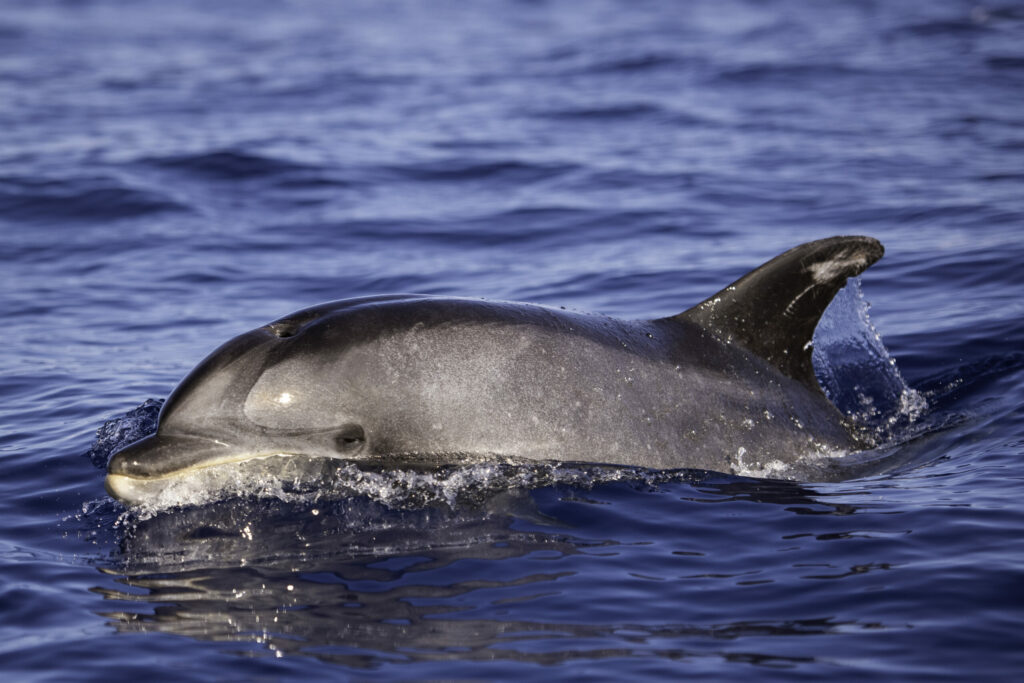
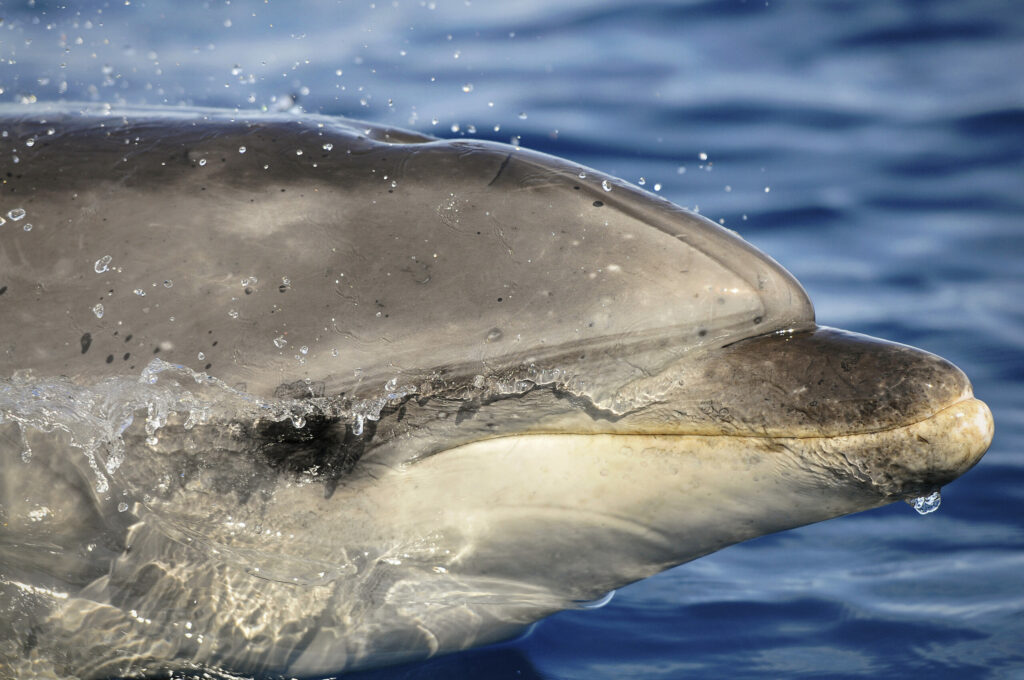
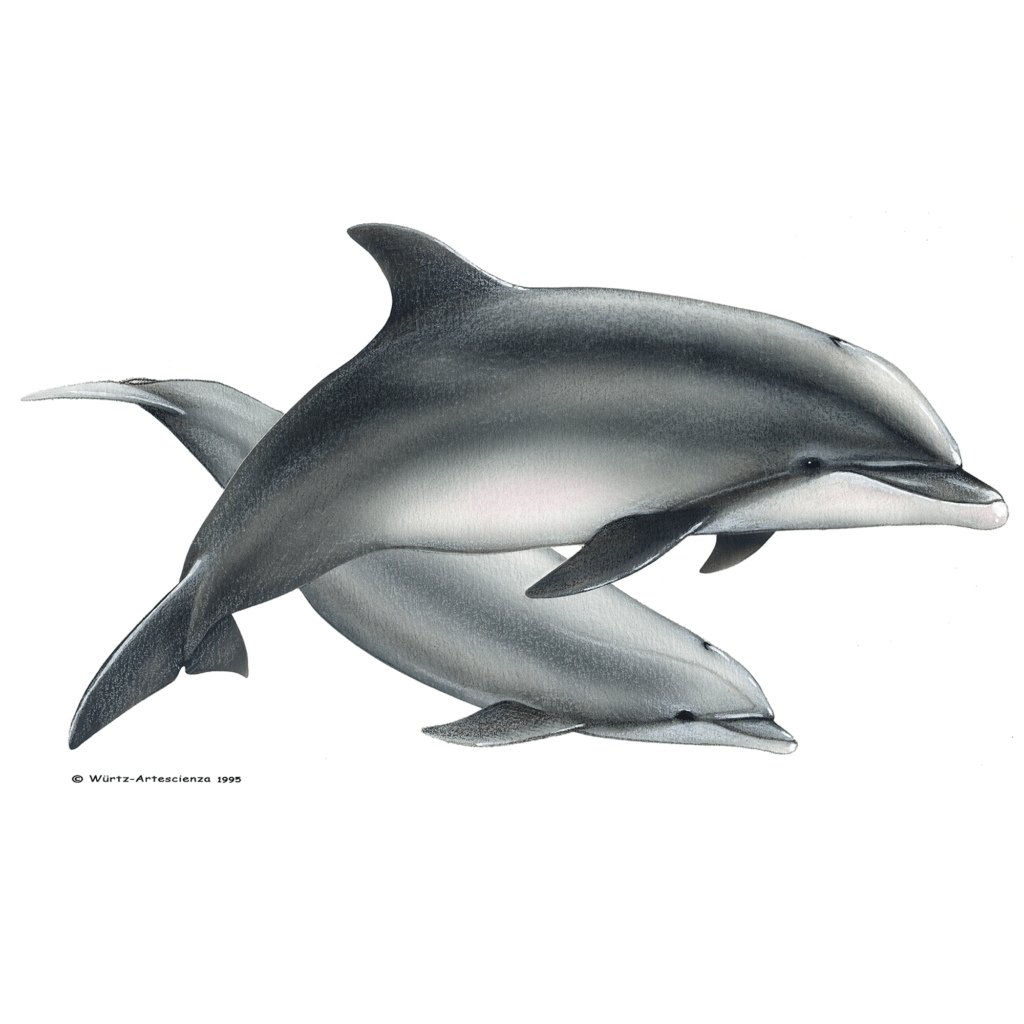
The Bottlenose dolphin is characterized by a high, bulbous forehead (melon) and a short, well-defined beak, with a distinct crease between the two. Their bodies are powerfully built and primarily grey, showing strong countershading: dark grey on the back, light grey on the flanks, and white or pinkish on the belly. In the Azores, we specifically encounter the offshore form, which is generally larger, darker, and more robust than the coastal variants seen in shallow bays or estuaries. Individual recognition is possible through "photo-ID" of the scars and nicks on their tall, falcate dorsal fins.
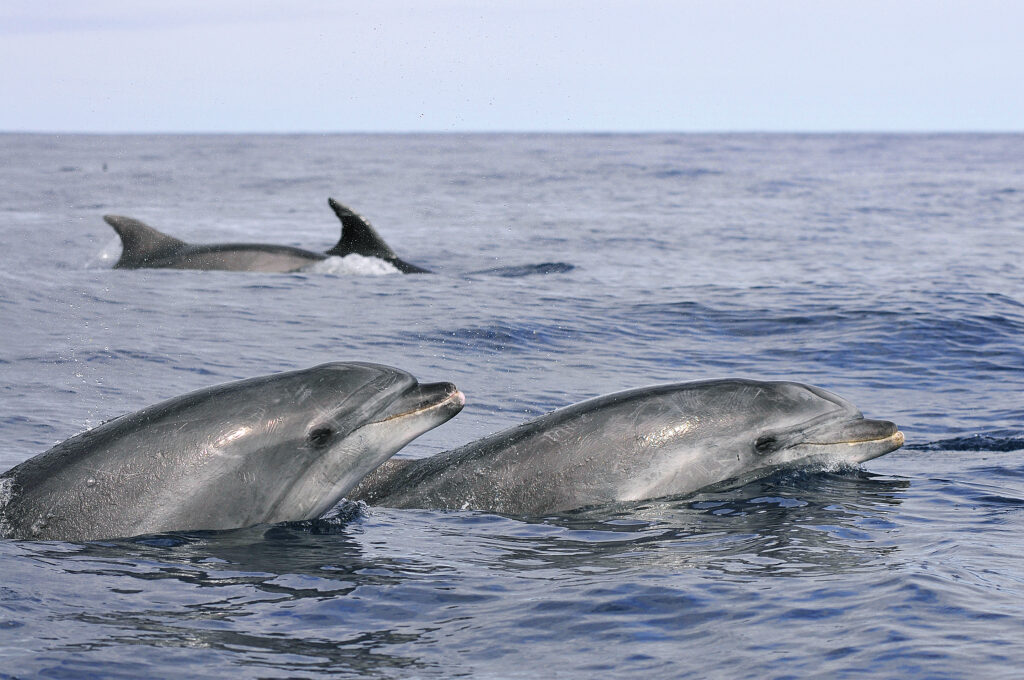
These dolphins have one of the most diverse diets of all cetaceans, preying on a wide variety of fish, squid, and crustaceans. Their social structure is a complex "fission-fusion" society, where groups change composition frequently. They are highly intelligent but can also be remarkably aggressive; they are known to attack and kill smaller cetaceans, such as common dolphins or harbour porpoises, sometimes without intending to feed. While they may appear friendly in pop culture (like the TV show "Flipper"), in the wild, they are formidable apex predators.
The Bottlenose dolphin is characterized by a high, bulbous forehead (melon) and a short, well-defined beak, with a distinct crease between the two. Their bodies are powerfully built and primarily grey, showing strong countershading: dark grey on the back, light grey on the flanks, and white or pinkish on the belly. In the Azores, we specifically encounter the offshore form, which is generally larger, darker, and more robust than the coastal variants seen in shallow bays or estuaries. Individual recognition is possible through "photo-ID" of the scars and nicks on their tall, falcate dorsal fins.
These dolphins have one of the most diverse diets of all cetaceans, preying on a wide variety of fish, squid, and crustaceans. Their social structure is a complex "fission-fusion" society, where groups change composition frequently. They are highly intelligent but can also be remarkably aggressive; they are known to attack and kill smaller cetaceans, such as common dolphins or harbour porpoises, sometimes without intending to feed. While they may appear friendly in pop culture (like the TV show "Flipper"), in the wild, they are formidable apex predators.
observation
Bottlenose dolphins are widely distributed in tropical and temperate waters worldwide, occupying habitats ranging from shallow estuaries to the deep open ocean.
Identification Tips: At a distance, they can be confused with Risso’s dolphins (Grampus griseus) or Atlantic spotted dolphins (Stenella frontalis). However, Risso’s dolphins lack a beak and are usually much more scarred/white, while spotted dolphins are smaller and slimmer. The Rough-toothed dolphin (Steno bredanensis) is also similar but can be distinguished by its long, tapering head that lacks the distinct crease between its melon and beak.
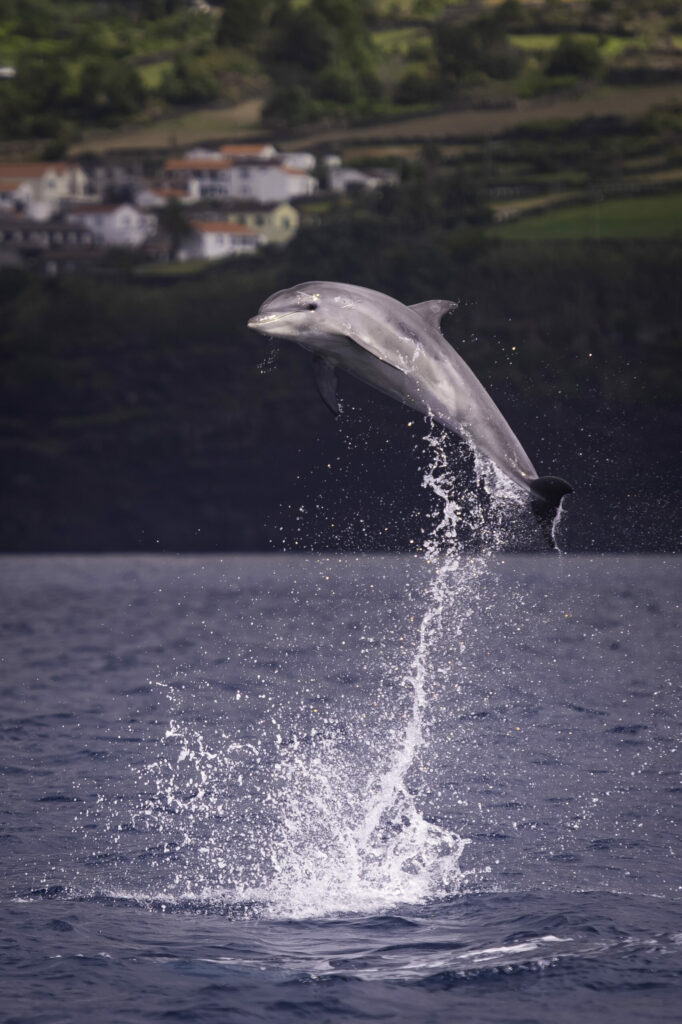
In the Azores, the Bottlenose dolphin is a resident species, present year-round and encountered in approximately 35% of Espaço Talassa’s trips. They are energetic swimmers, frequently approaching vessels to bow-ride, and are known for their high leaps and powerful "spyhopping" behavior.
Identification Tips: At a distance, they can be confused with Risso’s dolphins (Grampus griseus) or Atlantic spotted dolphins (Stenella frontalis). However, Risso’s dolphins lack a beak and are usually much more scarred/white, while spotted dolphins are smaller and slimmer. The Rough-toothed dolphin (Steno bredanensis) is also similar but can be distinguished by its long, tapering head that lacks the distinct crease between its melon and beak.
In the Azores, the Bottlenose dolphin is a resident species, present year-round and encountered in approximately 35% of Espaço Talassa’s trips. They are energetic swimmers, frequently approaching vessels to bow-ride, and are known for their high leaps and powerful "spyhopping" behavior.
names
PT: Roaz-corvineiro (ou Roaz)
AÇORES: Toninha-brava
ENG: Common bottlenose dolphin
FR: Grand dauphin (ou Tursiope)
DE: Groβer Tümmler
IT: Tursiope
ESP: Delfín mular
NL: Tuimelaar
AÇORES: Toninha-brava
ENG: Common bottlenose dolphin
FR: Grand dauphin (ou Tursiope)
DE: Groβer Tümmler
IT: Tursiope
ESP: Delfín mular
NL: Tuimelaar
Scientific name
Tursiops truncatus
Discovery
Montagu, 1821